





How to Drive in Heavy Rain Safely on Honolulu Roads
Knowing how to drive in heavy rain gives you a clear response when a Honolulu downpour arrives without warning. Furthermore, rain can hide lane markings, reduce tire grip, and fill low streets quickly. Therefore, your first actions should protect space, sight, and steering control. A calm response starts before water begins collecting across the pavement.

Slow Down Before Tire Grip Drops
How should you react when heavy rain begins without warning? Reduce speed smoothly, add following space, switch on low beam headlights, and reassess the road ahead. As a result, these actions give your tires and brakes more time to respond.
First, ease off the accelerator instead of making a sudden brake application. Abrupt input can shift weight quickly and unsettle the vehicle. Furthermore, slower travel gives tire grooves more time to move water away from the pavement. This contact supports steering and braking.
Read the rest of this entry »Dodge Charger Honolulu Daily Driving Guide for Oahu
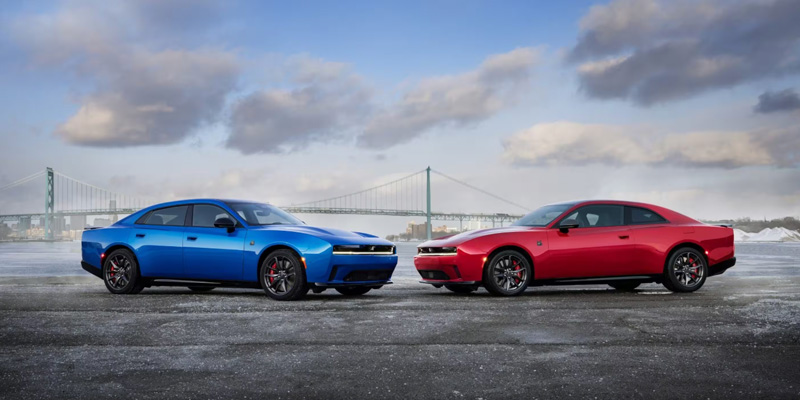
The Dodge Charger Honolulu drivers consider should fit more than their interest in power. Daily comfort, fuel needs, passenger space, and parking also matter across Oahu. Additionally, Honolulu travel includes short trips, dense traffic, steep grades, and crowded parking areas. Therefore, a Charger should match the routes you drive each week. Moreover, door count, power source, and cabin access deserve equal review. This guide explains those points before you compare available models.
Match the Charger to Your Honolulu Routine
Is a Dodge Charger good for daily driving in Honolulu? A Charger can suit daily travel when its layout and fuel needs match your routine. First, start by listing your common trips. Include work commutes, school runs, grocery stops, beach visits, and longer drives across Oahu.
Next, record the frequency of rear-seat use by adults or children. A two-door Charger keeps the coupe shape, yet rear entry takes more effort. A four-door Charger makes repeated passenger loading easier. Therefore, frequent rear-seat use may favor the four-door body.
Read the rest of this entry »Best Time to Trade In a Car: Honolulu Timing Guide
The best time to trade in a car depends on mileage, loan equity, repair needs, and current Honolulu demand. A calendar date cannot answer every part of that decision. Instead, review what your vehicle is worth today and what keeping it may cost next. This approach gives you clear signals before you visit a dealership. It also reduces surprises during the appraisal.

Start With Your Current Trade Position
When is the best time to trade in a car? The right point arrives when current value, loan equity, mileage, and near term costs support a change. Begin with an estimated trade value from more than one pricing source. Then request the payoff amount from your lender.
Next, compare those numbers. Positive equity means the appraisal exceeds the payoff. Negative equity means the payoff exceeds the appraisal. Therefore, the gap must be paid or included in the next finance agreement. That step shows whether trading now fits your budget.
Vehicle age also deserves attention. New vehicles lose value quickly during their early years. However, waiting longer may bring higher mileage, expired coverage, or larger repair bills. Your service history can support the appraisal by showing regular care. Keep receipts for oil changes, tires, brakes, and major repairs.
Before visiting an auto trade in dealership, gather several items:
Read the rest of this entry »Buying a Jeep in Hawaii follows the same broad arc as any vehicle purchase, but the details that surround that arc are specific to the islands in ways that most mainland buyer guides will not prepare you for. The General Excise Tax structure is different from a traditional sales tax. Registration fees are calculated on a weight basis that surprises first-time truck buyers. The trade-in market on Oahu runs differently from a mainland metro, and the inventory mix at a Hawaii dealership reflects island demand patterns that do not always match what a national review site describes. This guide walks through what a first-time Jeep or Ram buyer at Cutter Chrysler Jeep Dodge Ram Honda in Honolulu should expect at each step of the process, from the moment you arrive on the lot through the moment you drive off in your vehicle.
What the Dealership Process Looks Like From Arrival to Keys
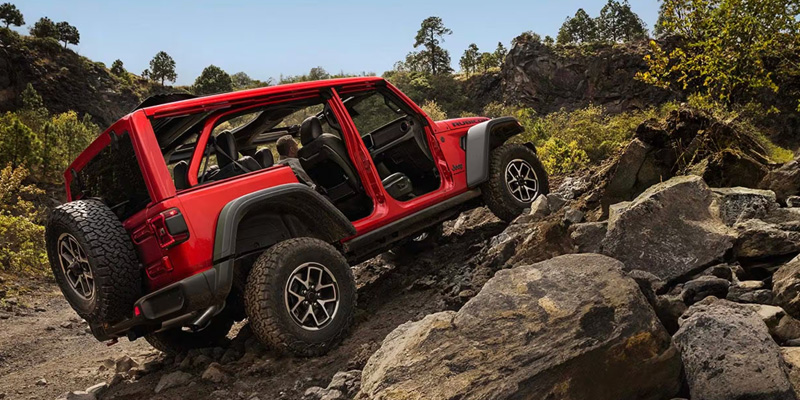
The dealership visit follows a predictable sequence, and understanding that sequence ahead of time removes most of the uncertainty that makes first-time buyers anxious. The process at Cutter in Honolulu runs through the same core steps as any Stellantis dealer, however the staff is accustomed to walking first-time buyers through each stage without pressure or confusion.
The first step is identifying the vehicle. If you have done research online and arrived with a model and trim in mind, the conversation moves faster. The sales team will confirm inventory, walk you through available configurations, and set up a test drive. The test drive is not a formality. It is the point where the Compass’s tighter footprint versus the Cherokee’s more substantial stance becomes something you feel, or where the Ram 1500’s cab quality registers differently than a spec sheet communicates. Take the time to drive more than one configuration if you are undecided.
After the vehicle decision, the process moves to numbers. The sales team will present pricing, applicable incentives, and a trade-in figure if you have a vehicle to sell. This is where pre-approval from your bank or credit union matters most. Having a rate in hand gives you a reference point before the finance office presents its own financing options. The numbers conversation can take thirty minutes to over an hour, and patience here protects the buyer more than speed does. Once the numbers are agreed upon, the process moves to the finance office, which is its own distinct step covered in Section 3.
Hawaii-Specific Costs That Will Appear on Your Contract
First-time buyers who research vehicle costs online will find national figures that do not reflect the total out-of-pocket number in Hawaii. Several line items on a Hawaii purchase contract do not appear in mainland guides, and arriving without knowing what they are makes the final figures feel larger and more surprising than they should.
Hawaii does not charge a traditional sales tax on vehicle purchases. What it charges instead is the General Excise Tax, or GET, which functions differently. GET is assessed at 4.712 percent in Honolulu County and is applied to the dealer’s gross receipts, not a straight percentage of your vehicle price. In practice, the GET line on your contract will be close to what a sales tax figure would look like, however the calculation structure is distinct and the rate does not match what a buyer accustomed to mainland tax tables will expect. The GET applies to the full vehicle price before incentives and rebates reduce it, which means buyers cannot calculate the tax figure by applying the rate to their negotiated price alone.
Registration fees in Hawaii are weight-based. A Ram 1500, a Jeep Cherokee, or a Jeep Compass each carry different curb weights, and the annual registration cost reflects that. A full-size Ram 1500 will generate a higher registration fee than a compact Compass, and that fee recurs annually. First-time truck buyers accustomed to sedan registration costs are frequently surprised by the difference. Furthermore, Hawaii charges a county surcharge on top of the base registration fee, and Honolulu County’s surcharge structure adds to the total. The documentation fee, which covers the dealer’s cost of processing the paperwork, is also a standard line item and is not negotiable in the same way that vehicle price is.
Financing Preparation and What the Finance Office Does
The finance office is the step that generates the most anxiety for first-time buyers, and it generates that anxiety because most buyers arrive without knowing what it involves. The finance manager is not a salesperson in the traditional sense. Their role is to finalize the loan structure, confirm the paperwork, and present a set of protection and add-on products for the buyer to consider. The meeting takes between thirty minutes and ninety minutes, and the pace is set partly by how prepared the buyer arrives.
Preparation starts before the dealership visit. A pre-approval letter from your bank, credit union, or Hawaii-based lender like Hawaii State Federal Credit Union or First Hawaiian Bank gives you a baseline rate the dealer must compete with or beat. Dealers have access to a network of lenders and can present competitive financing, however a buyer with no pre-approval has no reference point for evaluating what is offered. Bring your driver’s license, proof of insurance, and proof of income or recent pay stubs. If you are trading in a vehicle, bring the title and any loan payoff information.
The products offered in the finance office follow a consistent pattern. A first-time buyer should expect to see some combination of the following, and should evaluate each on its own merits:
- An extended service contract, called a warranty by most buyers, covers mechanical repairs beyond the factory warranty period. For a Jeep or Ram purchased in Hawaii, where a service appointment requires local availability and parts may take longer to source than on the mainland, this product deserves honest evaluation for buyers planning to keep the vehicle beyond the factory powertrain coverage window.
- GAP insurance covers the difference between what you owe on your loan and what the vehicle is worth if it is totaled or stolen before the loan is paid off. New vehicles depreciate quickly in the first year, and a buyer financing a significant portion of the vehicle price is exposed to a gap between loan balance and actual cash value. GAP is worth considering for buyers putting less than twenty percent down.
- Paint and interior protection packages vary widely in quality and value. In Hawaii’s UV intensity and salt air climate, surface protection products are not without merit, however the dealership versions are priced at a premium. A buyer who plans to maintain the vehicle independently can replicate much of the protection through regular ceramic coating and interior conditioning at a lower cost.
Trade-In Evaluation in Hawaii
Trading in a vehicle in Hawaii requires a different set of assumptions than a mainland trade. The resale market on Oahu is contained. There are fewer buyers, fewer auction outlets, and a different demand profile than a mainland metro with a larger population and more dealer competition. That market structure shapes what a dealership can offer for a trade, because the dealer’s ability to resell the vehicle quickly at a strong price is limited by the same island factors that shape the buyer’s side of the transaction.
Vehicle condition carries more weight in Hawaii trade-in evaluations than it does in many mainland markets. Salt air corrosion on undercarriage and suspension components, UV-driven paint oxidation, and interior sun damage from prolonged high-UV contact are all factors Hawaii dealers evaluate closely and discount against. A buyer who has maintained their current vehicle attentively, kept up with rust prevention, and addressed paint condition regularly will present a stronger trade candidate than the mileage and year alone suggest. Before bringing a trade to the dealership, a detail service and a documented maintenance record are two of the most cost-effective steps a seller can take.
The timing of a trade-in relative to a new vehicle purchase also matters. Trading in at the point of purchase is convenient, however it is not always the strongest financial move. Getting an independent appraisal from a service like CarMax, even if CarMax is not physically present on the island, through their online tool, gives the buyer a benchmark that makes the dealer’s offer easier to evaluate. A buyer who arrives knowing their vehicle’s independent value is in a stronger position than one who accepts the first figure without context.
Jeep and Ram Specifics for First-Time Buyers at Cutter
First-time buyers arrive at the Jeep and Ram lineup without a clear sense of where to start within it. The model range spans from compact SUVs to full-size trucks, and the trim structure within each model adds another layer of choices. At Cutter in Honolulu, the inventory reflects what island drivers select most frequently, and the sales team is familiar with pairing first-time buyers to configurations that match their actual use patterns on Oahu and not what a national bestseller list suggests.
A few orientation points help first-time buyers narrow the field before the lot visit:
- First-time Jeep buyers who prioritize daily Honolulu commuting and family use over trail-focused use should start with the Compass or Cherokee and not the Wrangler. The Wrangler’s body-on-frame construction, open-air design, and trail-first character make it a different daily proposition than its Jeep branding suggests to someone who has not driven one. The Compass and Cherokee deliver the Jeep identity with a more straightforward daily driving character.
- First-time Ram buyers who are unsure whether they need a full-size truck or a capable SUV should spend time with both the Ram 1500 and the Jeep Grand Cherokee before deciding. The Ram delivers genuine truck strength in towing and payload, however its size in Honolulu parking and its fuel draw in stop-and-go traffic are real daily considerations that a test drive on local streets will clarify faster than any spec comparison.
- Both the Jeep and Ram lineups carry factory warranty coverage that transfers without issue in Hawaii. Service is handled at Cutter’s own facility, and GM-certified technicians are on staff. A first-time buyer concerned about service access in an island market should know that Cutter handles warranty and recall work for the full Stellantis lineup without requiring a mainland visit or a shipping arrangement.
Ram 1500 Trim Levels: Work vs Comfort Explained
Ram 1500 trim levels separate two very different kinds of trucks under the same nameplate. The model spans from stripped-down work configurations with vinyl floors and minimal technology to fully appointed comfort trims with leather seating, air suspension, and premium audio. For a shopper in Honolulu working through the right configuration at Cutter Chrysler Jeep Dodge Ram Honda, the trim decision is less about adding features and more about identifying which version of the Ram 1500 was structured around a daily use pattern that matches the buyer’s own. This guide walks through the trim structure from the ground up, explains what each tier is built around, and applies that framing to the specific driving, climate, and purchase realities of island life.
How Ram Structures Its Trim Hierarchy
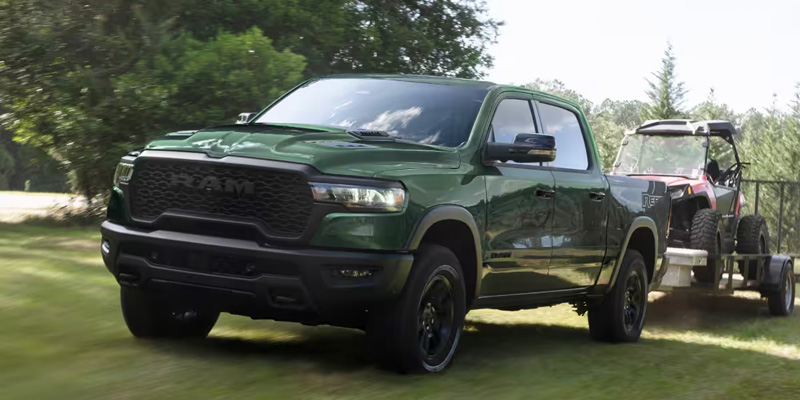
Ram organizes the 1500 trim range around a clear internal logic. The lower tiers, Tradesman and Big Horn, are structured for buyers who want a capable, reliable truck without paying for interior appointments they will cover in work gear or never use. The mid and upper tiers, Laramie and Longhorn, are structured for buyers who spend significant time in the cab and want the interior to reflect that. The Limited and TRX sit above that for buyers whose priorities extend into premium finishes or dedicated off-road setups.
The most important thing to understand before comparing individual trim features is that the powertrain story stays largely consistent across the range. The 3.6-liter Pentastar V6, the 5.7-liter HEMI V8, and the 3.0-liter EcoDiesel are available across multiple trims. Choosing between Tradesman and Laramie does not change which engine goes under the hood. What changes is everything surrounding the driver: the seat material, the technology stack, the sound insulation, and in the case of upper trims, the suspension setup. That framing matters because it keeps the comparison focused on what the trim decision is truly about.
Read the rest of this entry »Jeep Compass vs Cherokee: Daily Driving in Honolulu
The Jeep Compass vs Cherokee decision looks simple until you apply it to where you drive every day. On Oahu, the variables that separate these two models are not the same ones that dominate mainland comparisons. Highway segments are short. Surface streets are dense. Parking is tight. Rain arrives without warning on the Pali and the H-3. Beach runs, airport pickups, and family errands define the weekly schedule for most island drivers, and neither a spec table nor a lifestyle photo communicates how either Jeep handles those demands. This guide walks through the real differences between the Compass and the Cherokee in the context of daily driving in Honolulu, so the comparison points to something more useful than a number on a window sticker.
Size, Platform, and What It Means on Oahu Streets
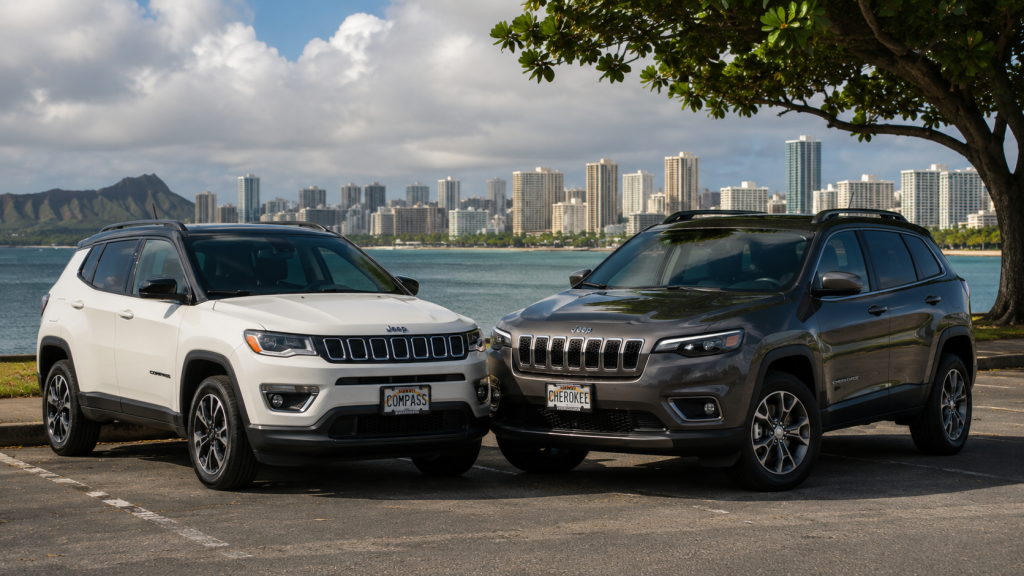
The Compass and the Cherokee share Jeep branding but not a platform. The Compass sits on a front-wheel-drive-based architecture that prioritizes a smaller footprint and lighter curb weight. The Cherokee uses a more substantial unibody setup that gives it a wider stance, more interior volume, and a ride character that leans toward composed highway travel. On paper, the Cherokee is the roomier and more capable package. On the streets of Kaimuki, Manoa, or downtown Honolulu, the Compass’s smaller dimensions become an advantage in ways the spec sheet does not capture.
The Compass measures roughly eight inches shorter in overall length than the Cherokee. That gap matters when navigating the multi-level parking structures near Ala Moana, squeezing into street parking in Chinatown, or making tight turns in residential neighborhoods built around pre-war lot sizes. The Cherokee is not a large SUV by national standards, however its extra length and width require more spatial awareness in exactly the driving contexts Honolulu presents most frequently. Drivers who cover urban routes daily will notice the Compass’s smaller profile as a tangible asset, not a compromise.
Read the rest of this entry »FIAT 500e Electric Vehicle Ownership Explained
FIAT 500e electric vehicle ownership feels different from gasoline vehicle driving because charging routines, regenerative braking, instant electric torque, and compact EV design change how commuting and city travel operate throughout the day. Drivers researching the FIAT 500e are usually trying to understand whether switching to an electric vehicle creates major lifestyle disruption or whether the adjustment becomes easier once charging and driving patterns settle into routine. The answer starts with how electric motors deliver acceleration, how charging replaces fuel stops, and how compact EV platforms change maneuverability throughout urban driving.
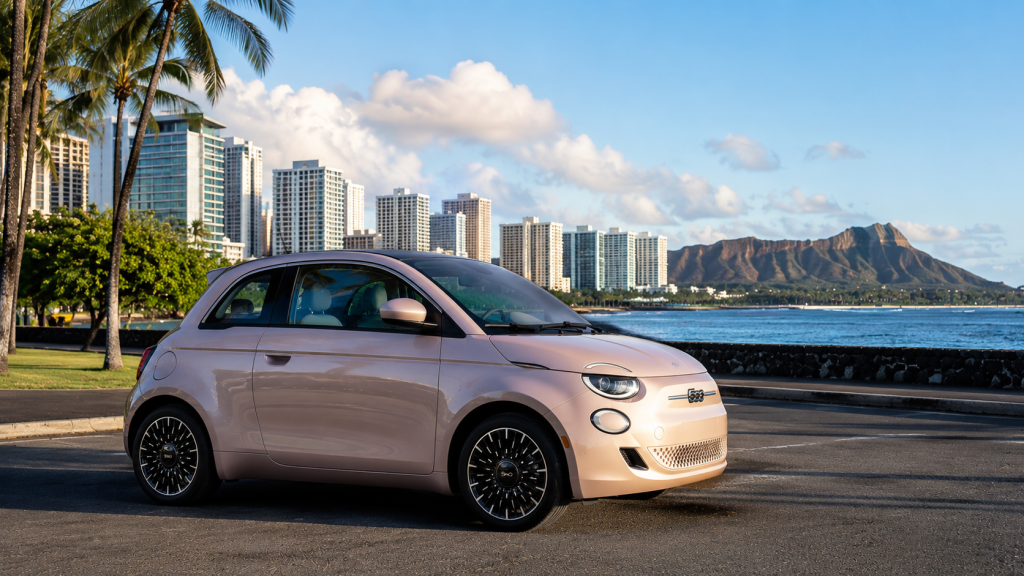
Why Driving an Electric Vehicle Feels Different From a Gasoline Vehicle
One of the first things drivers notice after switching to an EV is how differently the vehicle responds during acceleration and braking. That change begins with the electric motor.
Gasoline engines create power through combustion cycles that build RPM gradually. Electric motors deliver torque immediately because electricity transfers directly into rotational force without requiring combustion buildup. The FIAT 500e electric motor creates acceleration instantly when throttle input begins.
This changes city driving substantially:
Read the rest of this entry »Dodge Durango vs Three Row SUVs Explained
Dodge Durango vs three row SUV comparisons usually focus on horsepower and cargo measurements, though drivetrain layout, suspension tuning, towing calibration, and passenger packaging shape how these SUVs drive and haul weight. The Dodge Durango approaches the three row SUV category differently because its structure emphasizes rear wheel drive dynamics, stronger acceleration response, and higher towing support than most crossover based competitors. Buyers researching the Durango are usually trying to understand whether the SUV sacrifices passenger comfort and cargo organization in exchange for acceleration and towing strength. The answer starts with chassis structure, torque delivery, suspension loading, and interior packaging geometry.
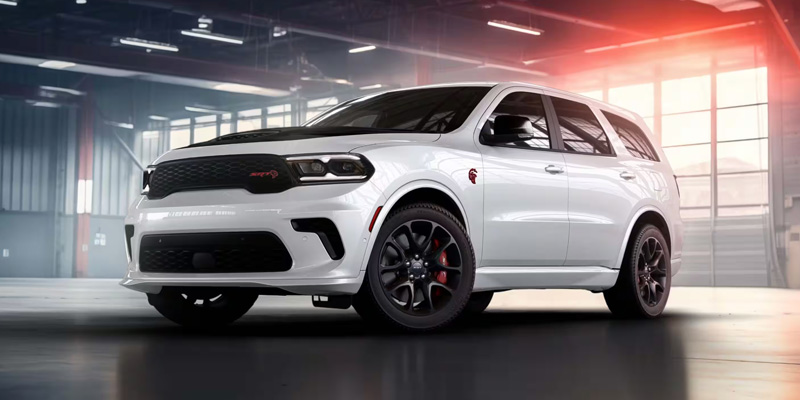
Why the Dodge Durango Feels Different From Most Three Row SUVs
One of the first things drivers notice about the Dodge Durango is that it does not feel like most crossover based three row SUVs. That difference begins with drivetrain architecture.
Most three row crossovers use front wheel drive based layouts where the front axle handles the majority of steering, acceleration, and drivetrain weight. The Dodge Durango uses a rear wheel drive based platform structure. Rear wheel drive changes how weight transfers through the SUV during acceleration, towing, and cornering.
During acceleration, weight naturally shifts toward the rear axle. A rear wheel drive SUV uses that weight transfer to increase traction at the driven wheels. That creates stronger launch feel and more balanced acceleration response during highway merging or passing.
The Durango structure changes vehicle response in several ways:
Read the rest of this entry »Jeep Gladiator Towing Capacity and Bed Utility
Jeep Gladiator towing capacity discussions usually focus on maximum trailer numbers, though towing stability, payload limits, axle ratios, and truck bed structure shape how the truck handles cargo and trailer weight in daily truck use. The Gladiator occupies a unique position because it combines Jeep off road architecture with midsize truck engineering. Buyers researching the Gladiator are usually trying to understand whether it behaves more like a Wrangler or a traditional pickup truck. That answer starts with frame structure, suspension calibration, payload management, and cargo positioning.

Why the Jeep Gladiator Uses a Different Frame Structure Than the Wrangler
One of the most common shopper questions asks what separates the Jeep Gladiator from the Wrangler mechanically. The answer begins underneath the body.
The Jeep Gladiator uses an extended frame structure with a significantly longer wheelbase than the Wrangler. A wheelbase measures the distance between the front and rear axles. Increasing wheelbase length changes trailer stability, cargo balance, and suspension load transfer during towing.
The Wrangler was structured primarily for trail maneuverability and shorter body proportions. The Gladiator extends that architecture into a truck platform by lengthening the rear frame rails and adding a cargo bed behind the cab. That longer structure changes how weight moves through the chassis during towing and hauling.
The Gladiator frame changes towing response in several ways:
Read the rest of this entry »The Chrysler Pacifica Hybrid is designed to answer a very specific question many families are now asking: how much fuel can we realistically avoid using in daily driving. For drivers in Hawaii, where trips are often shorter and more predictable, that question becomes even more practical. Understanding how the 2026 Chrysler Pacifica Hybrid system works, how its efficiency is measured, and how it compares to a standard gasoline Pacifica is what allows buyers to decide whether a hybrid actually fits their routine.
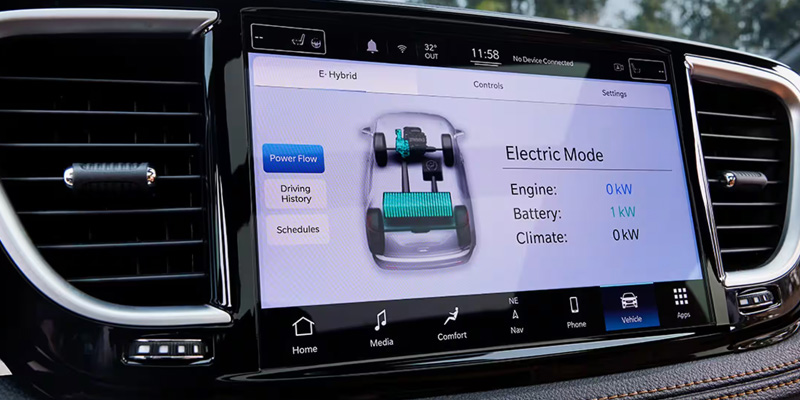
How MPGe and MPG Work in the 2026 Chrysler Pacifica Hybrid
Many shoppers researching the 2026 Chrysler Pacifica Hybrid ask what MPGe actually means and how it compares to MPG. MPGe, or miles per gallon equivalent, is a measurement that reflects how far a vehicle can travel using electric energy compared to the energy in a gallon of gasoline.
The 2026 Chrysler Pacifica Hybrid MPGe rating applies when the vehicle is operating on electric power from its battery. Once that battery energy is used, the vehicle transitions to standard hybrid operation and uses gasoline, at which point traditional MPG becomes the relevant measurement.
This is where confusion happens. MPGe does not replace MPG. It represents a different operating mode.
For comparison, a standard gasoline Chrysler Pacifica uses only MPG because it relies entirely on an internal combustion engine. That means fuel consumption is consistent across all driving, but it also means every mile driven requires gasoline.
The key difference between these two systems is how energy is used:
Read the rest of this entry »Connect with us


- July 2026
- June 2026
- May 2026
- April 2026
- May 2024
- March 2024
- February 2024
- December 2023
- November 2023
- October 2023
- September 2023
- August 2023
- July 2023
- June 2023
- May 2023
- April 2023
- March 2023
- February 2023
- January 2023
- December 2022
- November 2022
- October 2022
- September 2022
- August 2022
- July 2022
- June 2022
- May 2022
- April 2022
- March 2022
- February 2022
- January 2022