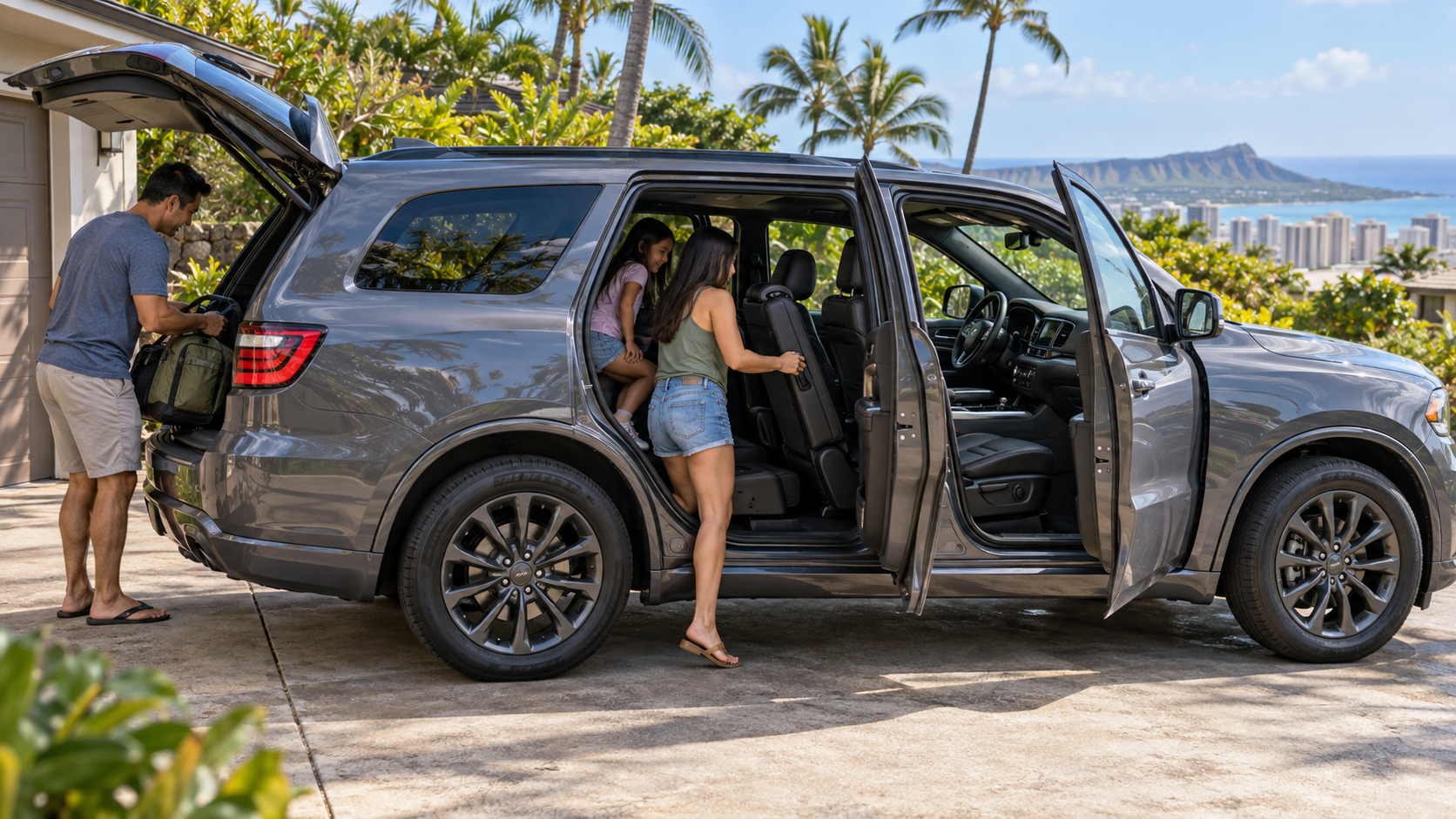





The Dodge Durango offers three rows of seating, with room for up to seven passengers in equipped configurations. That makes it worth considering when your household needs space for children, relatives, friends, and their belongings. However, the number of seats tells only part of the story. The Dodge Durango third row changes how passengers enter the cabin and how much cargo fits behind them. For Honolulu families, the next questions involve access, comfort, and storage. Knowing how the seats move and fold makes it easier to evaluate the Durango for school trips, commuting, and family outings. Dodge Durango Third Row Seating and Passenger Capacity The Dodge Durango offers three-row seating, but passenger capacity changes with the selected interior configuration. Models with a second-row bench can accommodate up to seven people. Available second-row captain's chairs create a six-passenger arrangement. The difference comes from the number of seating positions in the middle row. A bench provides three positions, while captain's chairs provide two separate seats. Both arrangements can retain the two-passenger third row when equipped. Does every Dodge Durango have seven seats? No. Shoppers should confirm the seating layout and equipment on the specific model they are considering. The three-row configuration places two passengers in the front, two or three in the middle, and two in the back. Therefore, selecting the second-row layout changes how many people can travel together. The third row sits behind the rear axle area, where the cabin narrows toward the back of the SUV. This location creates different seating dimensions from those in the first two rows. For instance, the 2026 Durango provides 38.6 inches of second-row legroom and 33.5 inches in the third row. That measurement difference matters when deciding where taller passengers should sit. Families should also compare seating capacity with their usual passenger count. A household carrying five people may prefer keeping the third row folded for cargo. Larger groups may need those rear seats available for every trip. How Second-Row Seating Changes Third-Row Access The Dodge Durango's second-row arrangement plays a major role in reaching the third row. The middle seats sit directly between rear passengers and the side doors. The Durango offers Fold & Tumble second-row seating for easier rear access. Pulling the release permits the seat to move forward, opening a path to the back. How do passengers enter the Dodge Durango third row? They use the side door and move through the available opening beside the repositioned second-row seat. However, the ease of entry changes with seat placement and passenger size. A child may navigate the opening differently from an adult carrying a backpack. Second-row captain's chairs provide another seating arrangement. Their separated layout changes how passengers move through the cabin and how middle-row occupants share space. Before choosing a configuration, families should inspect three details: Second-row entry space should provide enough clearance for passengers to reach the third row. Try the access mechanism with the front seats adjusted for your household. Child safety seats can restrict how far a middle-row seat moves. Check the vehicle manual and child restraint instructions before testing rear access. Captain's chairs and bench seating create different passenger arrangements. Compare both layouts while considering how frequently someone will enter the third row. A seating demonstration should include everyone who will use the back row. Additionally, adults should test the release mechanism and entry opening before deciding which configuration fits. For households transporting children, seatbelt access also deserves attention. Passengers need to reach their buckles without climbing over another occupied seating position. Third-Row Passenger Space and Comfort The Dodge Durango third row provides two additional seating positions behind the middle row. However, rear passenger comfort involves more than the advertised seat count. The 2026 Durango lists 33.5 inches of third-row legroom and 37.8 inches of headroom. These measurements describe available space but cannot predict how every passenger will fit. Can adults sit in the Dodge Durango third row? Yes, but taller passengers should assess knee clearance, foot placement, and headroom before planning longer trips. Seat cushion height also changes how passengers position their legs. A shorter cushion or higher floor may require greater knee bending than the middle row. Therefore, sitting in the back provides information that dimensions alone cannot communicate. Ask a prospective passenger to enter, buckle up, and check the available legroom. The Durango's rear-wheel-drive-based architecture also distinguishes its packaging from some front-wheel-drive-based three-row crossovers. Drivetrain placement, body proportions, and rear cabin geometry all contribute to interior dimensions. Still, an SUV's exterior length does not automatically reveal how roomy its last row feels. Different seating structures distribute interior space in different ways. For Honolulu families, consider who will occupy each row during longer island drives. Children may fit comfortably in rear positions that feel tighter for taller adults. Frequent third-row passengers should test that space with the second-row seats adjusted for their intended occupants. This provides a more realistic assessment than measuring the empty cabin. How Folding Dodge Durango Seats Changes Cargo Space Passenger seating and cargo storage share the same rear cabin area. When all three rows remain upright, luggage must fit behind the third row. The 2026 Dodge Durango provides 17.2 cubic feet of cargo space behind the third row. Folding that row increases storage space to 43.3 cubic feet behind the second row. With both rear rows folded, the Durango provides up to 85.1 cubic feet of cargo volume. Why does folding the third row create so much additional room? The seatbacks move toward a flatter position, opening the area previously occupied by rear passengers. The Durango also uses split-folding rear seats, giving families more than one arrangement for carrying people and belongings. Three common cargo configurations illustrate the difference: All three rows upright retain the available passenger seating and leave 17.2 cubic feet behind the third row. Measure larger bags before assuming everything will fit. Third row folded opens 43.3 cubic feet behind the middle seats. This arrangement supports larger cargo while preserving first- and second-row seating. Both rear rows folded open up to 85.1 cubic feet behind the front seats. This creates the largest available cargo area while reducing passenger seating to the front row. The 60/40 split-folding second row also provides additional arrangements. Families can fold part of a row while retaining certain seating positions. However, a partially folded seat changes the shape of the available loading area. Cargo measurements do not describe every item's length, width, or height. For instance, a stroller may fit differently from several upright suitcases occupying the same total volume. Therefore, bring measurements of frequently carried items when comparing SUVs. A family using all seven seats should pay particular attention to storage behind the last row. The maximum cargo figure does not apply when every passenger position remains available. Evaluating the Dodge Durango for Family Transportation in Honolulu The Dodge Durango combines three-row passenger seating with configurable rear storage and a rear-wheel-drive-based platform. These characteristics distinguish it from some crossover-based family SUVs. However, choosing a three-row SUV begins with how your household will use the cabin. Passenger count, third-row access, and cargo volume deserve attention before engine specifications. A family carrying six people regularly may evaluate captain's chairs differently from a household needing seven seats. Likewise, families transporting sports equipment may need to fold the third row between passenger trips. Oahu driving also presents familiar transportation demands. School pickups, errands, beach outings, and longer island drives can require different passenger and cargo arrangements. The Durango's available towing equipment and V8 engine configurations add another consideration for households hauling trailers. Yet towing ratings vary by equipment, so verify the specific model before planning a load. Shoppers comparing other three-row SUVs should assess seat movement and storage with the same test items. An advertised maximum cargo figure cannot replace checking how luggage fits with passengers aboard. Explore the Dodge Durango model page to review the SUV before comparing available configurations. You can also browse new Dodge inventory or all new vehicles to examine current options. For purchasing questions, the dealership's finance department provides another resource as you narrow your selection. Before choosing your Durango, test the rear seats with your usual passengers and measure the cargo you carry. The right seating configuration should accommodate your household without requiring constant rearrangement during every outing.