




Buying a Jeep in Hawaii follows the same broad arc as any vehicle purchase, but the details that surround that arc are specific to the islands in ways that most mainland buyer guides will not prepare you for. The General Excise Tax structure is different from a traditional sales tax. Registration fees are calculated on a weight basis that surprises first-time truck buyers. The trade-in market on Oahu runs differently from a mainland metro, and the inventory mix at a Hawaii dealership reflects island demand patterns that do not always match what a national review site describes. This guide walks through what a first-time Jeep or Ram buyer at Cutter Chrysler Jeep Dodge Ram Honda in Honolulu should expect at each step of the process, from the moment you arrive on the lot through the moment you drive off in your vehicle.
What the Dealership Process Looks Like From Arrival to Keys
The dealership visit follows a predictable sequence, and understanding that sequence ahead of time removes most of the uncertainty that makes first-time buyers anxious. The process at Cutter in Honolulu runs through the same core steps as any Stellantis dealer, however the staff is accustomed to walking first-time buyers through each stage without pressure or confusion.
The first step is identifying the vehicle. If you have done research online and arrived with a model and trim in mind, the conversation moves faster. The sales team will confirm inventory, walk you through available configurations, and set up a test drive. The test drive is not a formality. It is the point where the Compass’s tighter footprint versus the Cherokee’s more substantial stance becomes something you feel, or where the Ram 1500’s cab quality registers differently than a spec sheet communicates. Take the time to drive more than one configuration if you are undecided.
After the vehicle decision, the process moves to numbers. The sales team will present pricing, applicable incentives, and a trade-in figure if you have a vehicle to sell. This is where pre-approval from your bank or credit union matters most. Having a rate in hand gives you a reference point before the finance office presents its own financing options. The numbers conversation can take thirty minutes to over an hour, and patience here protects the buyer more than speed does. Once the numbers are agreed upon, the process moves to the finance office, which is its own distinct step covered in Section 3.
Hawaii-Specific Costs That Will Appear on Your Contract
First-time buyers who research vehicle costs online will find national figures that do not reflect the total out-of-pocket number in Hawaii. Several line items on a Hawaii purchase contract do not appear in mainland guides, and arriving without knowing what they are makes the final figures feel larger and more surprising than they should.
Hawaii does not charge a traditional sales tax on vehicle purchases. What it charges instead is the General Excise Tax, or GET, which functions differently. GET is assessed at 4.712 percent in Honolulu County and is applied to the dealer’s gross receipts, not a straight percentage of your vehicle price. In practice, the GET line on your contract will be close to what a sales tax figure would look like, however the calculation structure is distinct and the rate does not match what a buyer accustomed to mainland tax tables will expect. The GET applies to the full vehicle price before incentives and rebates reduce it, which means buyers cannot calculate the tax figure by applying the rate to their negotiated price alone.
Registration fees in Hawaii are weight-based. A Ram 1500, a Jeep Cherokee, or a Jeep Compass each carry different curb weights, and the annual registration cost reflects that. A full-size Ram 1500 will generate a higher registration fee than a compact Compass, and that fee recurs annually. First-time truck buyers accustomed to sedan registration costs are frequently surprised by the difference. Furthermore, Hawaii charges a county surcharge on top of the base registration fee, and Honolulu County’s surcharge structure adds to the total. The documentation fee, which covers the dealer’s cost of processing the paperwork, is also a standard line item and is not negotiable in the same way that vehicle price is.
Financing Preparation and What the Finance Office Does
The finance office is the step that generates the most anxiety for first-time buyers, and it generates that anxiety because most buyers arrive without knowing what it involves. The finance manager is not a salesperson in the traditional sense. Their role is to finalize the loan structure, confirm the paperwork, and present a set of protection and add-on products for the buyer to consider. The meeting takes between thirty minutes and ninety minutes, and the pace is set partly by how prepared the buyer arrives.
Preparation starts before the dealership visit. A pre-approval letter from your bank, credit union, or Hawaii-based lender like Hawaii State Federal Credit Union or First Hawaiian Bank gives you a baseline rate the dealer must compete with or beat. Dealers have access to a network of lenders and can present competitive financing, however a buyer with no pre-approval has no reference point for evaluating what is offered. Bring your driver’s license, proof of insurance, and proof of income or recent pay stubs. If you are trading in a vehicle, bring the title and any loan payoff information.
The products offered in the finance office follow a consistent pattern. A first-time buyer should expect to see some combination of the following, and should evaluate each on its own merits:
- An extended service contract, called a warranty by most buyers, covers mechanical repairs beyond the factory warranty period. For a Jeep or Ram purchased in Hawaii, where a service appointment requires local availability and parts may take longer to source than on the mainland, this product deserves honest evaluation for buyers planning to keep the vehicle beyond the factory powertrain coverage window.
- GAP insurance covers the difference between what you owe on your loan and what the vehicle is worth if it is totaled or stolen before the loan is paid off. New vehicles depreciate quickly in the first year, and a buyer financing a significant portion of the vehicle price is exposed to a gap between loan balance and actual cash value. GAP is worth considering for buyers putting less than twenty percent down.
- Paint and interior protection packages vary widely in quality and value. In Hawaii’s UV intensity and salt air climate, surface protection products are not without merit, however the dealership versions are priced at a premium. A buyer who plans to maintain the vehicle independently can replicate much of the protection through regular ceramic coating and interior conditioning at a lower cost.
Trade-In Evaluation in Hawaii
Trading in a vehicle in Hawaii requires a different set of assumptions than a mainland trade. The resale market on Oahu is contained. There are fewer buyers, fewer auction outlets, and a different demand profile than a mainland metro with a larger population and more dealer competition. That market structure shapes what a dealership can offer for a trade, because the dealer’s ability to resell the vehicle quickly at a strong price is limited by the same island factors that shape the buyer’s side of the transaction.
Vehicle condition carries more weight in Hawaii trade-in evaluations than it does in many mainland markets. Salt air corrosion on undercarriage and suspension components, UV-driven paint oxidation, and interior sun damage from prolonged high-UV contact are all factors Hawaii dealers evaluate closely and discount against. A buyer who has maintained their current vehicle attentively, kept up with rust prevention, and addressed paint condition regularly will present a stronger trade candidate than the mileage and year alone suggest. Before bringing a trade to the dealership, a detail service and a documented maintenance record are two of the most cost-effective steps a seller can take.
The timing of a trade-in relative to a new vehicle purchase also matters. Trading in at the point of purchase is convenient, however it is not always the strongest financial move. Getting an independent appraisal from a service like CarMax, even if CarMax is not physically present on the island, through their online tool, gives the buyer a benchmark that makes the dealer’s offer easier to evaluate. A buyer who arrives knowing their vehicle’s independent value is in a stronger position than one who accepts the first figure without context.
Jeep and Ram Specifics for First-Time Buyers at Cutter
First-time buyers arrive at the Jeep and Ram lineup without a clear sense of where to start within it. The model range spans from compact SUVs to full-size trucks, and the trim structure within each model adds another layer of choices. At Cutter in Honolulu, the inventory reflects what island drivers select most frequently, and the sales team is familiar with pairing first-time buyers to configurations that match their actual use patterns on Oahu and not what a national bestseller list suggests.
A few orientation points help first-time buyers narrow the field before the lot visit:
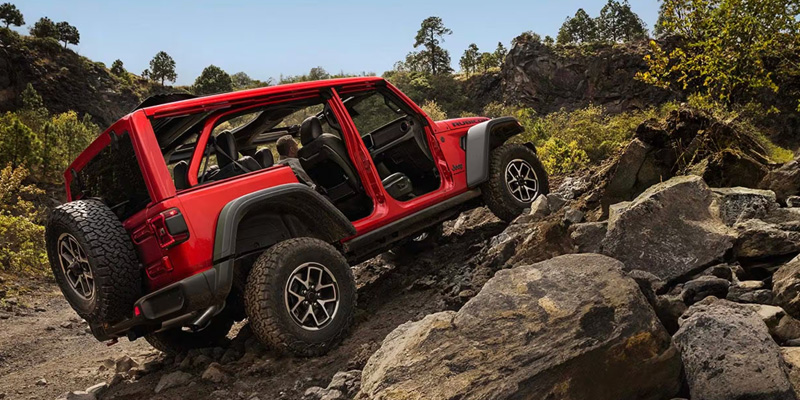
- First-time Jeep buyers who prioritize daily Honolulu commuting and family use over trail-focused use should start with the Compass or Cherokee and not the Wrangler. The Wrangler’s body-on-frame construction, open-air design, and trail-first character make it a different daily proposition than its Jeep branding suggests to someone who has not driven one. The Compass and Cherokee deliver the Jeep identity with a more straightforward daily driving character.
- First-time Ram buyers who are unsure whether they need a full-size truck or a capable SUV should spend time with both the Ram 1500 and the Jeep Grand Cherokee before deciding. The Ram delivers genuine truck strength in towing and payload, however its size in Honolulu parking and its fuel draw in stop-and-go traffic are real daily considerations that a test drive on local streets will clarify faster than any spec comparison.
- Both the Jeep and Ram lineups carry factory warranty coverage that transfers without issue in Hawaii. Service is handled at Cutter’s own facility, and GM-certified technicians are on staff. A first-time buyer concerned about service access in an island market should know that Cutter handles warranty and recall work for the full Stellantis lineup without requiring a mainland visit or a shipping arrangement.
Connect with us


- July 2026
- June 2026
- May 2026
- April 2026
- May 2024
- March 2024
- February 2024
- December 2023
- November 2023
- October 2023
- September 2023
- August 2023
- July 2023
- June 2023
- May 2023
- April 2023
- March 2023
- February 2023
- January 2023
- December 2022
- November 2022
- October 2022
- September 2022
- August 2022
- July 2022
- June 2022
- May 2022
- April 2022
- March 2022
- February 2022
- January 2022