





Ram 1500 trim levels separate two very different kinds of trucks under the same nameplate. The model spans from stripped-down work configurations with vinyl floors and minimal technology to fully appointed comfort trims with leather seating, air suspension, and premium audio. For a shopper in Honolulu working through the right configuration at Cutter Chrysler Jeep Dodge Ram Honda, the trim decision is less about adding features and more about identifying which version of the Ram 1500 was structured around a daily use pattern that matches the buyer’s own. This guide walks through the trim structure from the ground up, explains what each tier is built around, and applies that framing to the specific driving, climate, and purchase realities of island life.
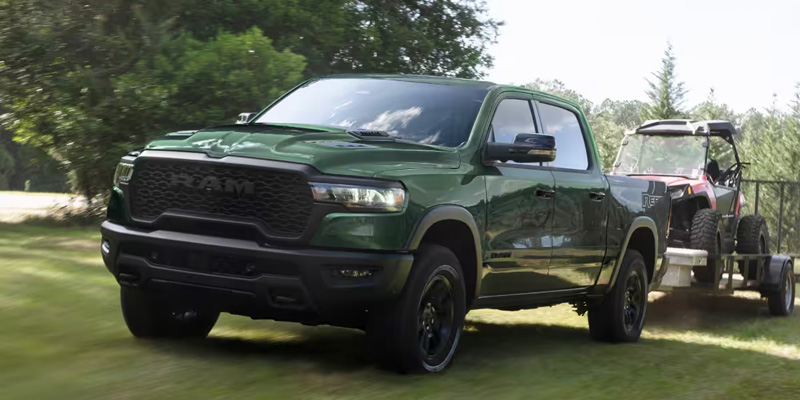
How Ram Structures Its Trim Hierarchy
Ram organizes the 1500 trim range around a clear internal logic. The lower tiers, Tradesman and Big Horn, are structured for buyers who want a capable, reliable truck without paying for interior appointments they will cover in work gear or never use. The mid and upper tiers, Laramie and Longhorn, are structured for buyers who spend significant time in the cab and want the interior to reflect that. The Limited and TRX sit above that for buyers whose priorities extend into premium finishes or dedicated off-road setups.
The most important thing to understand before comparing individual trim features is that the powertrain story stays largely consistent across the range. The 3.6-liter Pentastar V6, the 5.7-liter HEMI V8, and the 3.0-liter EcoDiesel are available across multiple trims. Choosing between Tradesman and Laramie does not change which engine goes under the hood. What changes is everything surrounding the driver: the seat material, the technology stack, the sound insulation, and in the case of upper trims, the suspension setup. That framing matters because it keeps the comparison focused on what the trim decision is truly about.
For Honolulu drivers, the trim hierarchy also intersects with inventory patterns. Hawaii dealers stock a different mix than mainland markets, and the Big Horn and Laramie tend to represent the core of available configurations at Cutter. Understanding what each of those tiers delivers, and where the dividing line sits between work-primary and comfort-primary trucks, gives the buyer a clearer framework before walking the lot.
Work-Oriented Trims: Tradesman and Big Horn
The Tradesman is the Ram 1500’s entry point, and it is structured without apology around work-first priorities. Vinyl flooring, a basic infotainment setup, and cloth seating keep the interior easy to clean and straightforward to maintain. For a contractor, tradesperson, or buyer who loads tools, equipment, and gear on a regular schedule, the Tradesman removes the anxiety of putting a work interior through daily abuse. The base HEMI V8 is available, the tow and payload ratings are the same as higher trims, and the exterior holds up to the same Hawaii sun and salt air contact as any other configuration in the lineup.
The Big Horn steps up without fully crossing into comfort territory. It adds features that matter for a buyer who splits time between job site and family use. Several of those additions change the daily character in ways the Tradesman cannot match:
- The Uconnect 8.4-inch infotainment display arrives at the Big Horn level, bringing wireless Apple CarPlay and Android Auto into a trim that still keeps vinyl flooring as a durable option. A driver managing job site calls, navigation, and music through the truck’s screen will notice that upgrade immediately.
- Exterior appearance packages and chrome or body-color trim give the Big Horn a visual step up from the Tradesman without requiring a move into comfort-tier pricing. For a buyer who uses the truck daily but wants it to look presentable at client sites or school pickup, that distinction matters.
- The Big Horn also marks the entry point for several safety technology options, including forward collision warning and available rear cross-path detection. In Honolulu traffic, where stop-and-go density is high and lane changes happen quickly, those features add a layer of daily reassurance the Tradesman does not carry.
Comfort-Oriented Trims: Laramie and Above
The Laramie is where the Ram 1500 transitions from work tool to daily sanctuary. Leather seating, a larger standard touchscreen, heated and ventilated front seats, and upgraded sound insulation change the character of the cab in ways that go beyond visible features. In Hawaii’s heat, ventilated front seats are not a luxury item. A driver who spends forty-five minutes in Honolulu traffic each way will notice that feature on every commute from June through October. The Laramie also adds real wood and metal interior accents that give the cab a notably different visual and tactile register than the Big Horn.
Is the Laramie worth stepping up from the Big Horn for a Hawaii driver? The answer hinges on how much time the buyer spends in the cab versus outside it. A buyer who loads and unloads constantly, leaves windows down at job sites, and treats the interior as a functional space will not recover the Laramie’s price premium through the features it adds. A buyer who commutes daily, carries passengers regularly, and uses the truck as a primary family vehicle will use every feature the Laramie delivers across the full time the buyer holds the truck.
The Longhorn and Limited trims extend the comfort story further with premium leather grades, real wood trim, and the available air suspension setup. The Ram 1500’s active-level air suspension, accessible at upper trim configurations, changes the ride character in a way no other single feature in the lineup matches. It allows the truck to lower at highway speeds for efficiency and raise for off-pavement clearance. For island drivers who occasionally run unpaved access roads to beaches or remote areas, that adjustment range adds a dimension the standard coil setup cannot replicate.
Powertrain Consistency and What It Means for the Comparison
Most shoppers approach a trim comparison expecting the engine options to diverge as the tiers go up. With the Ram 1500, that expectation does not hold across the core of the lineup. The 5.7-liter HEMI V8 with eTorque mild hybrid assist is available from the Tradesman through the Limited. The 3.0-liter EcoDiesel is accessible across several mid-range trims. A buyer choosing between Big Horn and Laramie is not choosing between a weaker and a stronger powertrain. The towing capacity, payload rating, and available engine output stay consistent. The trim decision separates interior, technology, and ride quality, not drivetrain output.
This framing changes how to evaluate the price gap between tiers. Every dollar of difference between a Big Horn and a Laramie goes toward cab material, technology integration, sound insulation, and feature content, not toward moving more weight or pulling a heavier trailer. For a buyer who arrived at the comparison focused on towing or hauling numbers, that clarification is worth having early. The right engine for the job is available at the trim that fits the interior priorities, not the other way around.
In Hawaii, the EcoDiesel deserves particular attention across whatever trim the buyer lands on. The diesel’s fuel efficiency advantage is more pronounced on the island, where fuel costs run above mainland averages and round-trip distances on Oahu are limited. A buyer who covers significant weekly mileage and stays within the island’s geography gets a stronger return from the diesel’s efficiency than a mainland driver covering long interstate stretches where the highway economy advantage narrows.
Matching Trim to Driver Profile in Hawaii
The clearest way to close this comparison is to match each tier to the driver profile it fits most naturally. At Cutter in Honolulu, the team works with buyers across each of these profiles on a regular basis, and the configuration conversation is more productive when the buyer arrives with a clear sense of how the truck will be used most days. Coastal island life in Hawaii adds one further layer: interior materials, exterior finishes, and seal quality all face more stress from salt air and UV contact than they would in a mainland climate. Higher trim interior materials tend to hold up better under those stressors when properly maintained, which is a factor worth weighing in the long-term cost picture.
- The Tradesman fits a buyer whose truck is a work tool first. The interior will take daily abuse, cleaning ease matters more than seat material, and the full powertrain range is available without paying for appointments the job site will ruin. It is a capable, honest configuration that delivers full Ram 1500 strength without the comfort-tier price.
- The Big Horn fits a buyer who splits the truck between work and family use. The infotainment upgrade, the available safety features, and the visual step up from Tradesman make it a natural fit for a driver who needs the truck to function well at the job site and look presentable everywhere else.
- The Laramie fits a buyer who spends significant daily time in the cab, commutes with passengers, and wants the interior to match the quality of the truck’s exterior and powertrain. In Hawaii’s heat, the ventilated seats and upgraded sound insulation make the Laramie’s premium feel functional, not decorative. Buyers who plan to keep the truck for five or more years in a coastal climate find the Laramie’s material quality holds the most long-term value.
Connect with us


- July 2026
- June 2026
- May 2026
- April 2026
- May 2024
- March 2024
- February 2024
- December 2023
- November 2023
- October 2023
- September 2023
- August 2023
- July 2023
- June 2023
- May 2023
- April 2023
- March 2023
- February 2023
- January 2023
- December 2022
- November 2022
- October 2022
- September 2022
- August 2022
- July 2022
- June 2022
- May 2022
- April 2022
- March 2022
- February 2022
- January 2022