



Jeep Gladiator towing capacity discussions usually focus on maximum trailer numbers, though towing stability, payload limits, axle ratios, and truck bed structure shape how the truck handles cargo and trailer weight in daily truck use. The Gladiator occupies a unique position because it combines Jeep off road architecture with midsize truck engineering. Buyers researching the Gladiator are usually trying to understand whether it behaves more like a Wrangler or a traditional pickup truck. That answer starts with frame structure, suspension calibration, payload management, and cargo positioning.
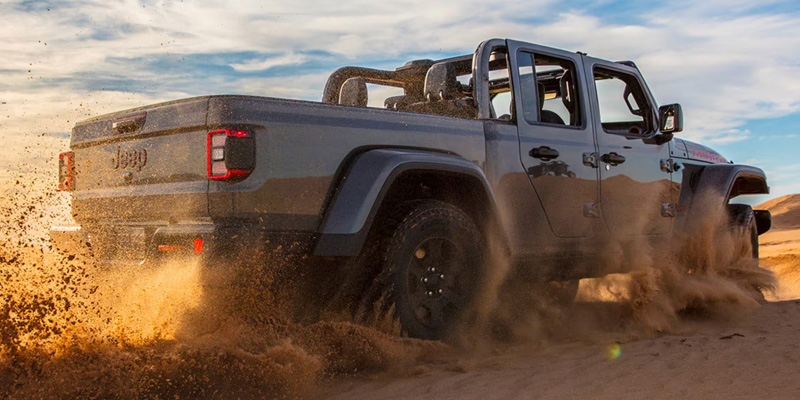
Why the Jeep Gladiator Uses a Different Frame Structure Than the Wrangler
One of the most common shopper questions asks what separates the Jeep Gladiator from the Wrangler mechanically. The answer begins underneath the body.
The Jeep Gladiator uses an extended frame structure with a significantly longer wheelbase than the Wrangler. A wheelbase measures the distance between the front and rear axles. Increasing wheelbase length changes trailer stability, cargo balance, and suspension load transfer during towing.
The Wrangler was structured primarily for trail maneuverability and shorter body proportions. The Gladiator extends that architecture into a truck platform by lengthening the rear frame rails and adding a cargo bed behind the cab. That longer structure changes how weight moves through the chassis during towing and hauling.
The Gladiator frame changes towing response in several ways:
• Longer wheelbase reduces abrupt trailer sway movement
• Extended rear frame distributes trailer tongue weight across a larger footprint
• Truck bed structure separates cargo from passenger space
• Rear suspension calibration supports heavier payload loading
This distinction matters because trailer towing places rotational force against the rear of the vehicle. A shorter wheelbase reacts more sharply to trailer movement, while a longer frame resists side to side motion more effectively during highway travel.
The Gladiator still maintains Jeep solid axle construction and removable body features, though the truck structure pushes the vehicle closer toward midsize pickup utility than Wrangler trail specialization.
How Towing Capacity and Payload Ratings Work Together
How much can the Jeep Gladiator tow? That number changes based on trim configuration, axle gearing, suspension calibration, and payload capacity.
Payload measures how much total weight the truck can carry inside the cabin and bed. This includes passengers, cargo, tools, hitch equipment, and trailer tongue weight. Towing capacity measures how much weight the truck can pull behind it.
These ratings work together.
Trailer tongue weight usually equals roughly ten to fifteen percent of total trailer weight. That tongue weight presses downward onto the rear suspension and immediately reduces remaining payload capacity.
This creates a common towing misunderstanding. A truck may advertise high towing numbers, though payload limits may be reached first once passengers and cargo are added.
Payload loading changes several mechanical responses:
• Rear suspension squat increases during heavier tongue weight loading
• Front steering response changes as rear axle load increases
• Braking distance extends when total vehicle weight rises
• Tire pressure requirements shift under heavier cargo loading
The Jeep Gladiator towing setup becomes more stable when trailer balance remains correct. Excessive rear trailer weight can create trailer sway because the trailer center of mass begins oscillating behind the rear axle.
Weight distribution matters inside the truck bed as well. Heavier cargo positioned too far rearward increases leverage against the suspension and changes steering balance. Cargo positioned closer to the cab maintains more stable chassis loading.
Understanding towing ratings requires evaluating the entire weight equation, not just the maximum trailer number alone.
What Axle Ratios and Wheelbase Length Change During Trailer Towing
What axle ratio works best for towing? An axle ratio measures how many driveshaft rotations occur for each rear wheel rotation. Lower gearing numerically increases torque multiplication at the wheels.
The Jeep Gladiator Max Tow configuration uses axle gearing that prioritizes trailer pulling force and acceleration under heavier load. Increasing torque multiplication allows the engine to maintain pulling strength without forcing excessive transmission hunting during hills or acceleration.
Axle gearing changes towing characteristics in several ways:
• Lower gearing increases launch force from stoplights
• Transmission downshifts occur less aggressively during grades
• Engine RPM stays more stable while carrying load
• Trailer acceleration feels smoother during merging
Wheelbase length also changes trailer stability during crosswinds and highway lane changes.
A trailer acts like a lever attached behind the rear axle. Shorter wheelbase vehicles react more sharply because the trailer applies force closer to the center of vehicle rotation. Longer wheelbase trucks resist those rotational inputs more effectively.
The Gladiator extended wheelbase changes towing control through:
• Increased directional stability during highway driving
• Reduced abrupt steering correction during trailer sway
• More gradual weight transfer during braking
• Better trailer tracking during lane transitions
The Gladiator Rubicon configuration approaches towing differently. Rubicon trims prioritize off road articulation using suspension tuning and tire setups focused on trail movement. The Gladiator Max Tow setup focuses more heavily on towing calibration and highway load stability.
How Gladiator Bed Length and Cargo Positioning Shape Truck Utility
What bed length comes on the Jeep Gladiator? The Gladiator uses a five foot truck bed, though utility extends far beyond bed dimensions alone.
Truck bed structure changes cargo organization, tie down strategy, and weight placement. Cargo movement inside the bed changes braking balance and steering stability during driving. Loose cargo shifting rearward creates sudden changes in center of mass distribution.
The Gladiator bed supports mixed hauling situations:
• Recreation gear such as surfboards, coolers, and camping equipment
• Work equipment including tools, generators, and construction supplies
• Towing accessories such as hitch hardware and recovery equipment
• Oversized cargo that would not fit inside enclosed SUVs
Tie down positioning also matters during hauling. Cargo secured closer to the front of the bed reduces rear leverage against the suspension. Cargo secured poorly or positioned too far rearward increases instability during acceleration and braking.
The Gladiator bed also changes how interior passenger space functions. Unlike enclosed SUVs, muddy equipment, fuel containers, wet gear, or construction materials remain separated from the cabin.
That separation changes truck utility significantly for drivers balancing recreation equipment and work supplies in the same vehicle platform.
Which Jeep Gladiator Configurations Fit Different Towing and Utility Priorities
Which Gladiator trim tows the most? The answer depends on whether towing strength, off road articulation, or cargo utility ranks highest for the buyer.
The Jeep Gladiator Max Tow setup prioritizes higher towing ratings through axle gearing, suspension calibration, and cooling system preparation. This configuration fits buyers planning to tow campers, utility trailers, boats, or heavier recreational equipment more regularly.
The Jeep Gladiator Rubicon approaches utility differently. Locking differentials, disconnecting sway bars, and aggressive tire configurations prioritize trail articulation and terrain control. Those features change suspension geometry and towing calibration.
Different Gladiator setups support different priorities:
• Gladiator Max Tow focuses on highway trailer control and heavier towing support
• Gladiator Rubicon prioritizes trail articulation and off road terrain management
• Gladiator Sport S balances commuter driving with moderate towing and hauling
• Bed utility remains consistent across trims, though suspension calibration changes load response
The Gladiator stands apart from traditional midsize trucks because it blends removable body architecture, solid axle suspension, and truck utility into one platform. Buyers researching towing and bed utility are not only comparing trailer numbers. They are evaluating how the truck distributes weight, controls cargo movement, manages trailer balance, and supports mixed recreation and work equipment across different driving situations.
Connect with us


- August 2026
- July 2026
- June 2026
- May 2026
- April 2026
- May 2024
- March 2024
- February 2024
- December 2023
- November 2023
- October 2023
- September 2023
- August 2023
- July 2023
- June 2023
- May 2023
- April 2023
- March 2023
- February 2023
- January 2023
- December 2022
- November 2022
- October 2022
- September 2022
- August 2022
- July 2022
- June 2022
- May 2022
- April 2022
- March 2022
- February 2022
- January 2022