




Tips for driving in rain start with checking the parts of your vehicle that control traction, visibility, and stopping. Hawaii's wetter months can bring sudden downpours, standing water, and lower visibility on familiar roads. Therefore, preparation should begin before the first heavy storm arrives. Tires, wipers, lights, brakes, and cabin clearing all deserve a close look. A short inspection now can reveal wear that becomes harder to manage once the pavement is wet.
Start With Tire Tread and Pressure
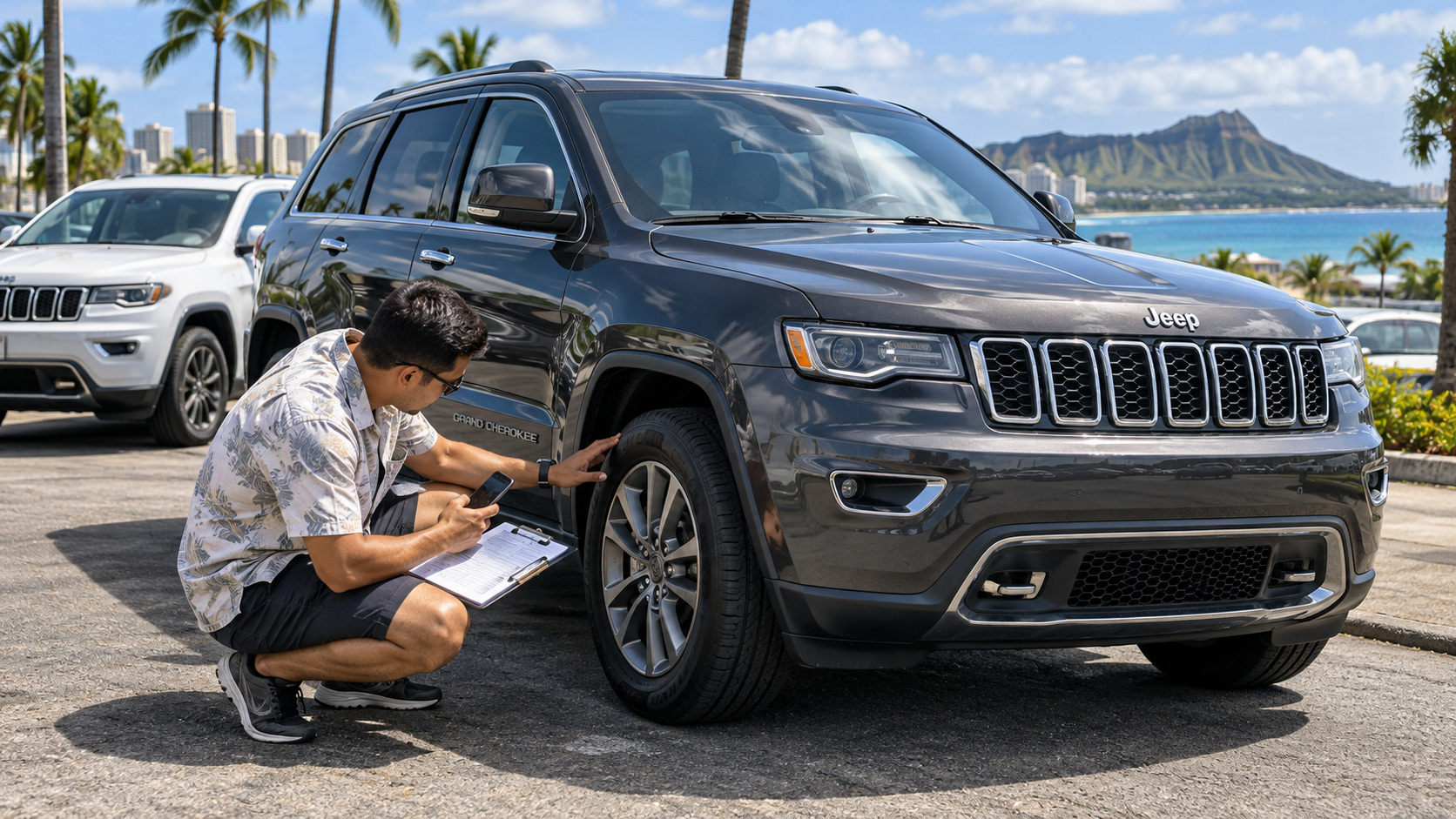
What should you inspect first before regular rainy weather? Start with tire tread, pressure, visible damage, and uneven wear. Tires are the only parts of the vehicle that touch the road. Therefore, their condition has a direct role in grip and water removal.
Tread channels move water away from the tire's contact area. As tread wears down, those channels have less depth available for water. This can make it easier for the tire to ride on a layer of water. In addition, uneven wear may leave one section with less usable tread than another.
Check the tread across several points on each tire. Look at the center, inner edge, and outer edge. Also inspect the sidewalls for cuts, bulges, cracking, or other visible damage.
Before wet weather settles in, a tire check should cover several items.
- Measure tread depth instead of relying only on a quick visual check.
- Check cold tire pressure against the value listed by the vehicle manufacturer.
- Look for uneven wear, embedded objects, sidewall damage, or areas that need professional inspection.
In addition, pressure matters because it changes the tire's shape against the pavement. Therefore, use the manufacturer listed pressure when the tires are cold. Do not use the maximum number molded into the tire sidewall as the target pressure.
Inspect Wiper Blades and Windshield Visibility
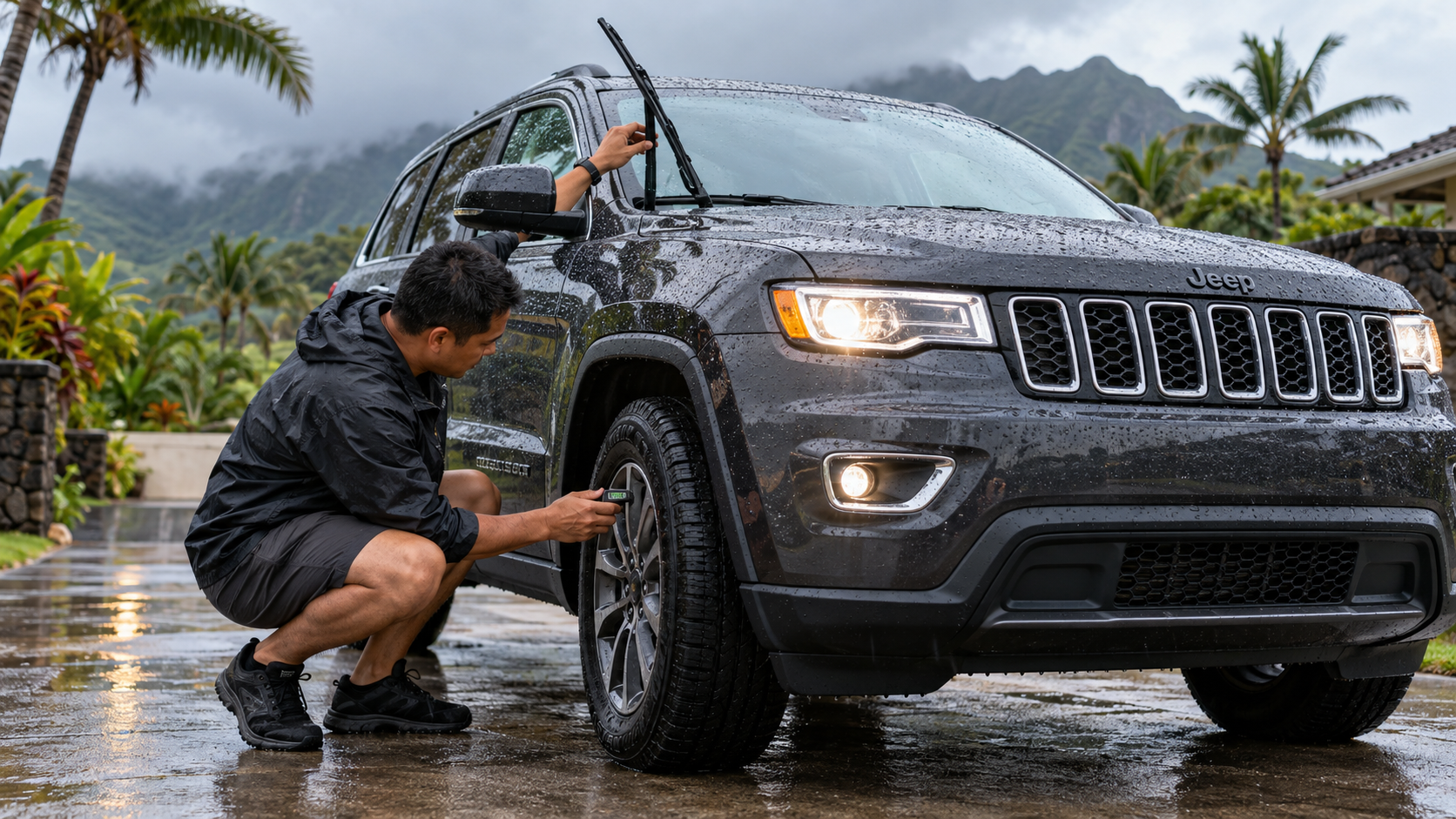
How can you tell whether your wipers are ready for heavy rain? Watch how they clear the glass, then inspect the rubber closely. A blade can move across the windshield and still leave too much water behind.
Streaks, skipped sections, chatter, or smearing can signal worn rubber or poor blade contact. Furthermore, torn edges or hardened rubber can keep the blade from following the windshield correctly. Replacing weak blades before a storm is simpler than discovering the problem during a downpour.
Furthermore, windshield preparation goes beyond the blades. Clean glass gives the wipers a better surface to clear. In addition, a full washer reservoir gives you a way to remove road spray, dirt, and residue between storms.
Check these visibility items before the wetter part of the year.
- Run the wipers with washer fluid and watch for streaks, missed areas, chatter, or skipping.
- Inspect the blade rubber for tears, hard spots, bending, or separation from the frame.
- Clean the inside and outside of the windshield so glare, film, and moisture are easier to manage.
Cabin airflow also matters when humid air fogs the glass. Therefore, test the front defogger and air conditioning before you need them. The windshield should clear quickly enough for you to keep a steady view of the road.
Check Every Exterior Light
Why do exterior lights matter before rain starts? They let you see ahead while also making your vehicle easier for surrounding traffic to notice. Rain can reduce contrast even during daylight, so weak or failed lights deserve attention before wet travel.
Start with the headlights and taillights. Then check the brake lights, turn signals, and hazard flashers. If one side appears dimmer, inspect the bulb or lighting unit before the next storm.
Additionally, a second person can make this check easier. Have someone stand outside while you press the brake pedal and operate each signal. If you are alone, use a wall or garage door reflection for a basic check, then confirm the lights directly.
Moreover, clean lenses matter too. Dirt and haze can reduce the amount of usable light leaving the housing. Therefore, wipe the lenses clean and look for moisture inside the assemblies.
Have the Brakes Checked Before Wet Roads Expose Problems
What brake warning signs deserve attention before rainy weather? Noise, pulling, vibration, grinding, or unusual pedal feel should prompt an inspection. Wet pavement gives the tires less grip, so the braking hardware should be ready before traction drops.
Furthermore, brake pads need enough material to create steady friction against the rotors. Rotors also need a usable surface without severe scoring, heavy rust, or damage. In addition, brake fluid should be at the correct level and free from known service concerns.
In addition, pay attention to what the vehicle tells you during ordinary stops. A steering pull can point to uneven braking or another issue that deserves diagnosis. Vibration through the pedal or steering wheel can also signal a problem that should be checked.
A brake inspection before the rainy season should focus on clear warning signs.
- Listen for grinding, scraping, squealing, or other new sounds during braking.
- Notice whether the vehicle pulls, vibrates, or needs unusual pedal travel to slow down.
- Ask for pad, rotor, and fluid checks if service history is unclear or any warning sign appears.
After driving through deeper water, brake response can feel different for a short period. Therefore, use extra space and light pedal pressure until the brakes respond normally again. Never enter flood water simply to test whether a road is passable.
Make Sure the Cabin Can Stay Clear and Dry
What happens if the windshield keeps fogging during rain? Moisture inside the cabin can block your view even when the wipers are working correctly. Therefore, the heating, ventilation, air conditioning, and defogging controls need to respond quickly.
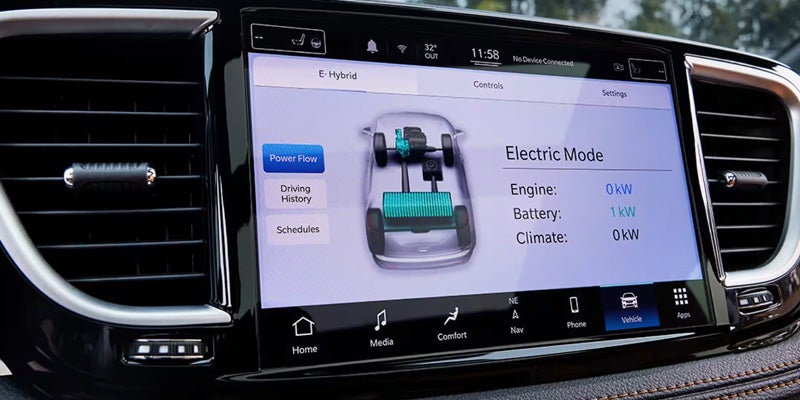
Test the front defogger before a storm. Turn on the air conditioning and direct airflow toward the windshield. You should feel air reaching the glass across a broad area.
Furthermore, check the cabin for obvious moisture entry. Damp carpet, wet floor mats, or recurring condensation may point to a leak that needs attention. Door and window seals should sit firmly against their mating surfaces.
Keeping the cabin dry also reduces how much moisture collects on the glass. In addition, clean interior glass is easier to clear because oily film can hold moisture and increase glare.
Use the Inspection to Prepare for Hawaii's Wet Season
What should you confirm before the first stretch of heavy rain? Confirm that the vehicle can maintain grip, clear the windshield, signal clearly, stop predictably, and remove fog from the cabin.
Moreover, start early enough to fix worn parts before a storm arrives. Therefore, do not wait for a rainy morning to discover weak wipers or low tread. A driveway check can catch many basic issues. In addition, a service visit can address concerns that need closer inspection.
Hawaii rain can arrive quickly and make familiar roads feel very different. Standing water can also hide pavement edges, potholes, or debris. For this reason, preparation should support calm decisions once the road becomes wet.
Your rainy season check does not need to be complicated. Inspect the tires, test the wipers, verify the lights, listen to the brakes, and confirm the defogger works. When each part is ready, the vehicle is easier to assess. Therefore, you can address weak points before the next storm arrives.