




The 2026 Jeep Wrangler lineup is designed around a clear but often misunderstood concept: each trim changes how the vehicle behaves, not just what features it includes. Many shoppers comparing Wrangler trims are trying to understand which model actually fits their driving, especially in a place like Oʻahu where conditions range from city traffic and wet pavement to sand and uneven terrain. The key to choosing the right 2026 Jeep Wrangler is understanding how its systems work and how those systems translate to real-world use.
How Jeep Wrangler Trims Are Engineered Around Capability vs Daily Driving
Many shoppers researching 2026 Jeep Wrangler trims ask what the real difference is between models like Sport, Sahara, and Rubicon. The answer is that each trim adjusts the balance between mechanical capability and everyday usability.
The 2026 Jeep Wrangler Sport is built around core Jeep architecture. It provides a standard 4×4 system, solid axles, and the foundational structure needed for light off-road use, but without specialized hardware. This makes it effective for drivers who want flexibility without committing to higher-level systems they may not use.
The 2026 Jeep Wrangler Sahara shifts that balance toward daily driving. It builds on the same platform but prioritizes ride comfort, interior usability, and technology integration. These changes do not fundamentally alter capability, but they change how the vehicle behaves during everyday use.
The 2026 Jeep Wrangler Rubicon is engineered in the opposite direction. Instead of adding comfort first, it introduces mechanical systems designed to improve traction, control, and low-speed maneuverability in off-road environments.
For Oʻahu drivers, this distinction matters because most driving happens on pavement, with occasional transitions to sand or trails. Choosing a trim is less about maximum capability and more about how often that capability will be used.
How the 2026 Jeep Wrangler 4×4 Systems Actually Work Across Trims
Many buyers comparing Wrangler trims want to understand the difference between the 2026 Jeep Wrangler Command-Trac 4×4 system and the 2026 Jeep Wrangler Rock-Trac 4×4 system. A 4×4 system is a drivetrain configuration that distributes engine torque to both the front and rear axles to improve traction.
The 2026 Jeep Wrangler Command-Trac 4×4 system, used on Sport and Sahara trims, is a part-time system with a lower gear ratio designed for general traction scenarios. When engaged, it splits torque between the front and rear axles, helping maintain forward movement on loose or wet surfaces.
The 2026 Jeep Wrangler Rock-Trac 4×4 system, used on the Rubicon, changes how torque is applied. It uses a lower transfer case gear ratio, which multiplies torque at the wheels while reducing vehicle speed. This allows the Wrangler to move more slowly and with greater control.
Mechanically, this difference affects driving in three key ways:
- Lower gearing increases torque output at low speeds without requiring throttle input
- Torque delivery becomes more controlled, reducing wheel spin
- The vehicle can maintain movement over obstacles without relying on momentum
For Oʻahu conditions, Command-Trac is typically sufficient for sand and rain. Rock-Trac becomes relevant when traction varies significantly across wheels, such as on uneven or rocky terrain.
How Locking Differentials and Axle Control Change Rubicon Capability
Many shoppers ask what makes the 2026 Jeep Wrangler Rubicon more capable than other trims. The answer lies in how it manages torque at the axle level through locking differentials.
A locking differential is a system that forces both wheels on an axle to rotate at the same speed, regardless of traction conditions. In a standard differential, torque is distributed unevenly when one wheel loses traction. The slipping wheel receives more power, reducing overall forward movement.
The 2026 Jeep Wrangler Rubicon locking differentials eliminate this imbalance by mechanically linking both wheels together. This ensures that torque is applied evenly, even if one wheel has less grip.
The Rubicon also includes an electronic sway bar disconnect system. A sway bar is a component that limits suspension movement to improve stability. Disconnecting it allows the suspension to move more freely, increasing articulation.
This combination changes how the vehicle behaves:
- Locking differentials maintain forward movement when traction is uneven
- Increased articulation keeps more tires in contact with the ground
- Torque is applied more effectively across all available contact points
For buyers, the implication is clear. These systems are not general-use upgrades. They are designed for conditions where traction varies dramatically between wheels. For most Oʻahu drivers, they represent specialized capability rather than a daily necessity.
How Suspension and Tire Design Affect Ride and Handling
Many comparisons mention tires and suspension differences but do not explain how they affect real driving. Suspension determines how a vehicle absorbs impacts and maintains tire contact with the road or terrain.
The 2026 Jeep Wrangler Sport and Sahara use suspension setups designed for balance. These systems prioritize predictable handling and stability on paved roads while still allowing moderate articulation for light off-road use.
The 2026 Jeep Wrangler Rubicon uses a suspension system tuned for articulation. Articulation refers to the ability of each wheel to move independently to maintain contact with uneven surfaces.
This difference changes driving behavior:
- Higher articulation improves traction off-road by keeping tires grounded
- Softer suspension tuning can reduce stability at higher speeds
- Larger off-road tires increase grip on loose surfaces but may introduce more road noise
Shoppers comparing trims should evaluate:
- how often they drive on uneven terrain
- whether ride comfort or off-road traction matters more
- how tire size impacts both grip and daily drivability
For Oʻahu drivers, where paved roads dominate daily use, the balance-focused setup of Sport or Sahara often aligns better with real driving conditions.
How Interior and Technology Differences Affect Daily Ownership
Many buyers deciding between the 2026 Jeep Wrangler Sport and Sahara ask whether interior upgrades are worth it. Interior and technology systems affect how the vehicle functions during everyday use, not just how it feels.
The 2026 Jeep Wrangler interior technology includes systems such as infotainment displays, driver assistance features, and seat adjustments. These systems influence usability by reducing driver workload and improving comfort.
For example:
- Larger infotainment systems improve navigation visibility and interaction
- Driver assistance features reduce effort during parking and traffic conditions
- Seat adjustability affects long-term comfort during daily driving
These differences matter because they are used constantly. While off-road systems may be used occasionally, interior systems are part of every drive.
For buyers using their Wrangler as a primary vehicle, these features often carry more long-term value than additional off-road hardware.
Choosing the Right 2026 Jeep Wrangler Trim for Oʻahu Driving Conditions
Many shoppers comparing the 2026 Jeep Wrangler trims are ultimately trying to answer one question: which configuration actually fits how I drive day to day. The answer depends on how often you will rely on the Wrangler’s traction systems versus how often you are using it as a daily vehicle.
Looking at the available Wrangler inventory, most configurations fall into a few key patterns, and each one aligns to a different type of use.
The 2026 Jeep Wrangler 4-Door Sahara represents the strongest balance between capability and daily usability. It retains the Wrangler’s Command-Trac 4×4 system while prioritizing interior comfort, technology, and smoother on-road behavior. For Oʻahu drivers commuting through Honolulu, handling rain, and occasionally driving on sand or uneven terrain, this configuration typically aligns with real-world use.
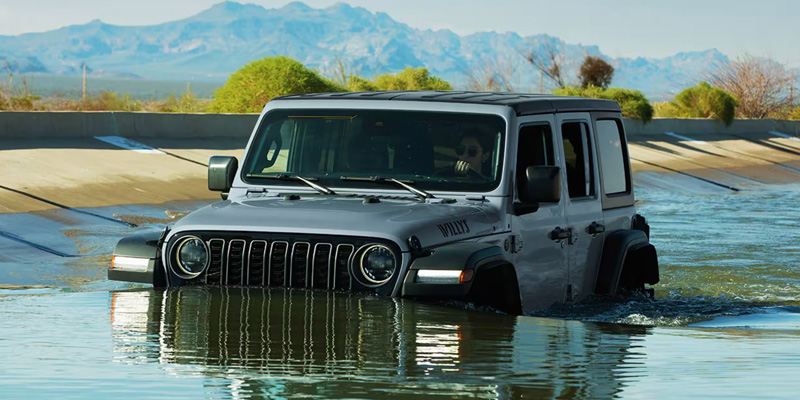
The 2026 Jeep Wrangler 4-Door Willys shifts toward off-road-focused value. It builds on the standard 4×4 system but introduces more aggressive tire and traction-oriented components. This makes it more capable than a standard Sport configuration in loose or uneven terrain without introducing the full mechanical complexity of the Rubicon.
The 2026 Jeep Wrangler 4-Door Rubicon is designed for drivers who will actively use advanced traction systems. Its Rock-Trac 4×4 system, locking differentials, and articulation-focused suspension are built for conditions where traction varies significantly between wheels. For most Oʻahu driving scenarios, these systems are specialized, but for buyers planning regular trail use, they provide meaningful control advantages.
The 2026 Jeep Wrangler Sport and Sport S configurations, including both 2-door and 4-door options, serve as the most straightforward entry into the Wrangler platform. They provide the core Command-Trac 4×4 system and solid axle construction without additional off-road hardware. These trims are often the most flexible starting point for buyers who want capability but prefer to evaluate upgrades based on actual use over time.
There are also more specialized configurations within the lineup. The 2026 Jeep Wrangler 85th Anniversary Edition and Wrangler MOAB 392 represent more niche use cases, combining appearance, performance, or higher-output capability with the Wrangler platform. These trims typically appeal to buyers with very specific preferences rather than general-use needs.
For Oʻahu drivers, the decision comes down to how often the vehicle’s advanced systems will actually be used.
- If driving is primarily on-road with occasional sand or light trails, the Sahara or Sport S provides the most practical balance
- If off-road capability is a regular part of driving, the Willys introduces meaningful traction improvements
- If maximum mechanical control is required for challenging terrain, the Rubicon’s systems become relevant
The most effective way to choose between Wrangler trims is to match the vehicle’s mechanical systems to your actual driving conditions. When the 2026 Jeep Wrangler’s 4×4 systems, suspension behavior, and traction hardware are understood in real terms, the trim decision becomes a clear alignment between capability and daily use rather than a comparison of feature lists.
Connect with us


- August 2026
- July 2026
- June 2026
- May 2026
- April 2026
- May 2024
- March 2024
- February 2024
- December 2023
- November 2023
- October 2023
- September 2023
- August 2023
- July 2023
- June 2023
- May 2023
- April 2023
- March 2023
- February 2023
- January 2023
- December 2022
- November 2022
- October 2022
- September 2022
- August 2022
- July 2022
- June 2022
- May 2022
- April 2022
- March 2022
- February 2022
- January 2022