




Cutter Chrysler Dodge Jeep Ram Fiat Honolulu

Blog / Honolulu Jeep Dealer

Jeep Gladiator Towing Capacity and Bed Utility

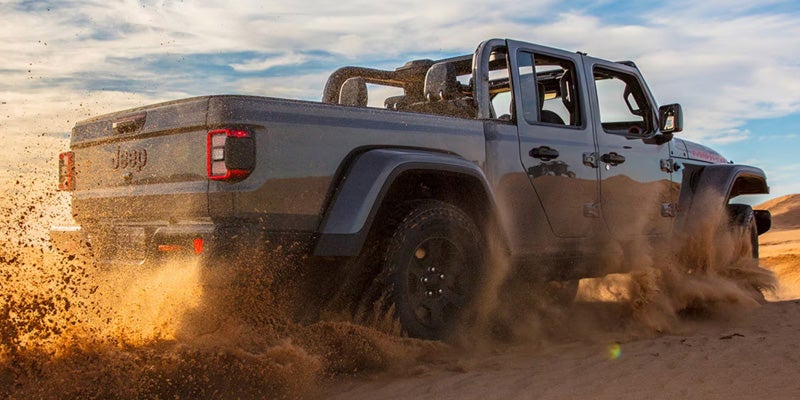
Jeep Gladiator towing capacity discussions usually focus on maximum trailer numbers, though towing stability, payload limits, axle ratios, and truck bed structure shape how the truck handles cargo and trailer weight in daily truck use. The Gladiator occupies a unique position because it combines Jeep off road architecture with midsize truck engineering. Buyers researching the Gladiator are usually trying to understand whether it behaves more like a Wrangler or a traditional pickup truck. That answer starts with frame structure, suspension calibration, payload management, and cargo positioning.

Why the Jeep Gladiator Uses a Different Frame Structure Than the Wrangler

One of the most common shopper questions asks what separates the Jeep Gladiator from the Wrangler mechanically. The answer begins underneath the body.

The Jeep Gladiator uses an extended frame structure with a significantly longer wheelbase than the Wrangler. A wheelbase measures the distance between the front and rear axles. Increasing wheelbase length changes trailer stability, cargo balance, and suspension load transfer during towing.

The Wrangler was structured primarily for trail maneuverability and shorter body proportions. The Gladiator extends that architecture into a truck platform by lengthening the rear frame rails and adding a cargo bed behind the cab. That longer structure changes how weight moves through the chassis during towing and hauling.

The Gladiator frame changes towing response in several ways:

• Longer wheelbase reduces abrupt trailer sway movement
• Extended rear frame distributes trailer tongue weight across a larger footprint
• Truck bed structure separates cargo from passenger space
• Rear suspension calibration supports heavier payload loading

This distinction matters because trailer towing places rotational force against the rear of the vehicle. A shorter wheelbase reacts more sharply to trailer movement, while a longer frame resists side to side motion more effectively during highway travel.

The Gladiator still maintains Jeep solid axle construction and removable body features, though the truck structure pushes the vehicle closer toward midsize pickup utility than Wrangler trail specialization.

How Towing Capacity and Payload Ratings Work Together

How much can the Jeep Gladiator tow? That number changes based on trim configuration, axle gearing, suspension calibration, and payload capacity.

Payload measures how much total weight the truck can carry inside the cabin and bed. This includes passengers, cargo, tools, hitch equipment, and trailer tongue weight. Towing capacity measures how much weight the truck can pull behind it.

These ratings work together.

Trailer tongue weight usually equals roughly ten to fifteen percent of total trailer weight. That tongue weight presses downward onto the rear suspension and immediately reduces remaining payload capacity.

This creates a common towing misunderstanding. A truck may advertise high towing numbers, though payload limits may be reached first once passengers and cargo are added.

Payload loading changes several mechanical responses:

• Rear suspension squat increases during heavier tongue weight loading
• Front steering response changes as rear axle load increases
• Braking distance extends when total vehicle weight rises
• Tire pressure requirements shift under heavier cargo loading

The Jeep Gladiator towing setup becomes more stable when trailer balance remains correct. Excessive rear trailer weight can create trailer sway because the trailer center of mass begins oscillating behind the rear axle.

Weight distribution matters inside the truck bed as well. Heavier cargo positioned too far rearward increases leverage against the suspension and changes steering balance. Cargo positioned closer to the cab maintains more stable chassis loading.

Understanding towing ratings requires evaluating the entire weight equation, not just the maximum trailer number alone.

What Axle Ratios and Wheelbase Length Change During Trailer Towing

What axle ratio works best for towing? An axle ratio measures how many driveshaft rotations occur for each rear wheel rotation. Lower gearing numerically increases torque multiplication at the wheels.

The Jeep Gladiator Max Tow configuration uses axle gearing that prioritizes trailer pulling force and acceleration under heavier load. Increasing torque multiplication allows the engine to maintain pulling strength without forcing excessive transmission hunting during hills or acceleration.

Axle gearing changes towing characteristics in several ways:

• Lower gearing increases launch force from stoplights
• Transmission downshifts occur less aggressively during grades
• Engine RPM stays more stable while carrying load
• Trailer acceleration feels smoother during merging

Wheelbase length also changes trailer stability during crosswinds and highway lane changes.

A trailer acts like a lever attached behind the rear axle. Shorter wheelbase vehicles react more sharply because the trailer applies force closer to the center of vehicle rotation. Longer wheelbase trucks resist those rotational inputs more effectively.

The Gladiator extended wheelbase changes towing control through:

• Increased directional stability during highway driving
• Reduced abrupt steering correction during trailer sway
• More gradual weight transfer during braking
• Better trailer tracking during lane transitions

The Gladiator Rubicon configuration approaches towing differently. Rubicon trims prioritize off road articulation using suspension tuning and tire setups focused on trail movement. The Gladiator Max Tow setup focuses more heavily on towing calibration and highway load stability.

How Gladiator Bed Length and Cargo Positioning Shape Truck Utility

What bed length comes on the Jeep Gladiator? The Gladiator uses a five foot truck bed, though utility extends far beyond bed dimensions alone.

Truck bed structure changes cargo organization, tie down strategy, and weight placement. Cargo movement inside the bed changes braking balance and steering stability during driving. Loose cargo shifting rearward creates sudden changes in center of mass distribution.

The Gladiator bed supports mixed hauling situations:

• Recreation gear such as surfboards, coolers, and camping equipment
• Work equipment including tools, generators, and construction supplies
• Towing accessories such as hitch hardware and recovery equipment
• Oversized cargo that would not fit inside enclosed SUVs

Tie down positioning also matters during hauling. Cargo secured closer to the front of the bed reduces rear leverage against the suspension. Cargo secured poorly or positioned too far rearward increases instability during acceleration and braking.

The Gladiator bed also changes how interior passenger space functions. Unlike enclosed SUVs, muddy equipment, fuel containers, wet gear, or construction materials remain separated from the cabin.

That separation changes truck utility significantly for drivers balancing recreation equipment and work supplies in the same vehicle platform.

Which Jeep Gladiator Configurations Fit Different Towing and Utility Priorities

Which Gladiator trim tows the most? The answer depends on whether towing strength, off road articulation, or cargo utility ranks highest for the buyer.

The Jeep Gladiator Max Tow setup prioritizes higher towing ratings through axle gearing, suspension calibration, and cooling system preparation. This configuration fits buyers planning to tow campers, utility trailers, boats, or heavier recreational equipment more regularly.

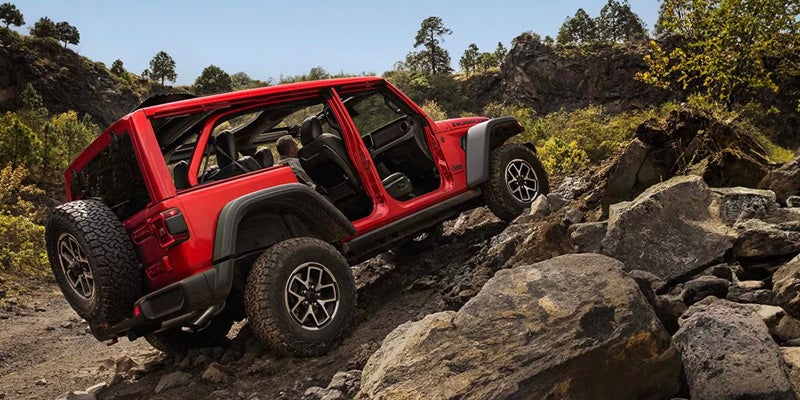
The Jeep Gladiator Rubicon approaches utility differently. Locking differentials, disconnecting sway bars, and aggressive tire configurations prioritize trail articulation and terrain control. Those features change suspension geometry and towing calibration.

Different Gladiator setups support different priorities:

• Gladiator Max Tow focuses on highway trailer control and heavier towing support
• Gladiator Rubicon prioritizes trail articulation and off road terrain management
• Gladiator Sport S balances commuter driving with moderate towing and hauling
• Bed utility remains consistent across trims, though suspension calibration changes load response

The Gladiator stands apart from traditional midsize trucks because it blends removable body architecture, solid axle suspension, and truck utility into one platform. Buyers researching towing and bed utility are not only comparing trailer numbers. They are evaluating how the truck distributes weight, controls cargo movement, manages trailer balance, and supports mixed recreation and work equipment across different driving situations.
Posted in:

Related Posts

Buying a Jeep in Hawaii: First-Time Truck Buyer Guide

Buying a Jeep in Hawaii follows the same broad arc as any vehicle purchase, but the details that surround that arc are specific to the islands in ways that most mainland buyer guides will not prepare you for. The General Excise Tax structure is different from a traditional sales tax. Registration fees are calculated on a weight basis that surprises first-time truck buyers. The trade-in market on Oahu runs differently from a mainland metro, and the inventory mix at a Hawaii dealership reflects island demand patterns that do not always match what a national review site describes. This guide walks through what a first-time Jeep or Ram buyer at Cutter Chrysler Jeep Dodge Ram Honda in Honolulu should expect at each step of the process, from the moment you arrive on the lot through the moment you drive off in your vehicle. What the Dealership Process Looks Like From Arrival to Keys The dealership visit follows a predictable sequence, and understanding that sequence ahead of time removes most of the uncertainty that makes first-time buyers anxious. The process at Cutter in Honolulu runs through the same core steps as any Stellantis dealer, however the staff is accustomed to walking first-time buyers through each stage without pressure or confusion. The first step is identifying the vehicle. If you have done research online and arrived with a model and trim in mind, the conversation moves faster. The sales team will confirm inventory, walk you through available configurations, and set up a test drive. The test drive is not a formality. It is the point where the Compass's tighter footprint versus the Cherokee's more substantial stance becomes something you feel, or where the Ram 1500's cab quality registers differently than a spec sheet communicates. Take the time to drive more than one configuration if you are undecided. After the vehicle decision, the process moves to numbers. The sales team will present pricing, applicable incentives, and a trade-in figure if you have a vehicle to sell. This is where pre-approval from your bank or credit union matters most. Having a rate in hand gives you a reference point before the finance office presents its own financing options. The numbers conversation can take thirty minutes to over an hour, and patience here protects the buyer more than speed does. Once the numbers are agreed upon, the process moves to the finance office, which is its own distinct step covered in Section 3. Hawaii-Specific Costs That Will Appear on Your Contract First-time buyers who research vehicle costs online will find national figures that do not reflect the total out-of-pocket number in Hawaii. Several line items on a Hawaii purchase contract do not appear in mainland guides, and arriving without knowing what they are makes the final figures feel larger and more surprising than they should. Hawaii does not charge a traditional sales tax on vehicle purchases. What it charges instead is the General Excise Tax, or GET, which functions differently. GET is assessed at 4.712 percent in Honolulu County and is applied to the dealer's gross receipts, not a straight percentage of your vehicle price. In practice, the GET line on your contract will be close to what a sales tax figure would look like, however the calculation structure is distinct and the rate does not match what a buyer accustomed to mainland tax tables will expect. The GET applies to the full vehicle price before incentives and rebates reduce it, which means buyers cannot calculate the tax figure by applying the rate to their negotiated price alone. Registration fees in Hawaii are weight-based. A Ram 1500, a Jeep Cherokee, or a Jeep Compass each carry different curb weights, and the annual registration cost reflects that. A full-size Ram 1500 will generate a higher registration fee than a compact Compass, and that fee recurs annually. First-time truck buyers accustomed to sedan registration costs are frequently surprised by the difference. Furthermore, Hawaii charges a county surcharge on top of the base registration fee, and Honolulu County's surcharge structure adds to the total. The documentation fee, which covers the dealer's cost of processing the paperwork, is also a standard line item and is not negotiable in the same way that vehicle price is. Financing Preparation and What the Finance Office Does The finance office is the step that generates the most anxiety for first-time buyers, and it generates that anxiety because most buyers arrive without knowing what it involves. The finance manager is not a salesperson in the traditional sense. Their role is to finalize the loan structure, confirm the paperwork, and present a set of protection and add-on products for the buyer to consider. The meeting takes between thirty minutes and ninety minutes, and the pace is set partly by how prepared the buyer arrives. Preparation starts before the dealership visit. A pre-approval letter from your bank, credit union, or Hawaii-based lender like Hawaii State Federal Credit Union or First Hawaiian Bank gives you a baseline rate the dealer must compete with or beat. Dealers have access to a network of lenders and can present competitive financing, however a buyer with no pre-approval has no reference point for evaluating what is offered. Bring your driver's license, proof of insurance, and proof of income or recent pay stubs. If you are trading in a vehicle, bring the title and any loan payoff information. The products offered in the finance office follow a consistent pattern. A first-time buyer should expect to see some combination of the following, and should evaluate each on its own merits: An extended service contract, called a warranty by most buyers, covers mechanical repairs beyond the factory warranty period. For a Jeep or Ram purchased in Hawaii, where a service appointment requires local availability and parts may take longer to source than on the mainland, this product deserves honest evaluation for buyers planning to keep the vehicle beyond the factory powertrain coverage window. GAP insurance covers the difference between what you owe on your loan and what the vehicle is worth if it is totaled or stolen before the loan is paid off. New vehicles depreciate quickly in the first year, and a buyer financing a significant portion of the vehicle price is exposed to a gap between loan balance and actual cash value. GAP is worth considering for buyers putting less than twenty percent down. Paint and interior protection packages vary widely in quality and value. In Hawaii's UV intensity and salt air climate, surface protection products are not without merit, however the dealership versions are priced at a premium. A buyer who plans to maintain the vehicle independently can replicate much of the protection through regular ceramic coating and interior conditioning at a lower cost. Trade-In Evaluation in Hawaii Trading in a vehicle in Hawaii requires a different set of assumptions than a mainland trade. The resale market on Oahu is contained. There are fewer buyers, fewer auction outlets, and a different demand profile than a mainland metro with a larger population and more dealer competition. That market structure shapes what a dealership can offer for a trade, because the dealer's ability to resell the vehicle quickly at a strong price is limited by the same island factors that shape the buyer's side of the transaction. Vehicle condition carries more weight in Hawaii trade-in evaluations than it does in many mainland markets. Salt air corrosion on undercarriage and suspension components, UV-driven paint oxidation, and interior sun damage from prolonged high-UV contact are all factors Hawaii dealers evaluate closely and discount against. A buyer who has maintained their current vehicle attentively, kept up with rust prevention, and addressed paint condition regularly will present a stronger trade candidate than the mileage and year alone suggest. Before bringing a trade to the dealership, a detail service and a documented maintenance record are two of the most cost-effective steps a seller can take. The timing of a trade-in relative to a new vehicle purchase also matters. Trading in at the point of purchase is convenient, however it is not always the strongest financial move. Getting an independent appraisal from a service like CarMax, even if CarMax is not physically present on the island, through their online tool, gives the buyer a benchmark that makes the dealer's offer easier to evaluate. A buyer who arrives knowing their vehicle's independent value is in a stronger position than one who accepts the first figure without context. Jeep and Ram Specifics for First-Time Buyers at Cutter First-time buyers arrive at the Jeep and Ram lineup without a clear sense of where to start within it. The model range spans from compact SUVs to full-size trucks, and the trim structure within each model adds another layer of choices. At Cutter in Honolulu, the inventory reflects what island drivers select most frequently, and the sales team is familiar with pairing first-time buyers to configurations that match their actual use patterns on Oahu and not what a national bestseller list suggests. A few orientation points help first-time buyers narrow the field before the lot visit: First-time Jeep buyers who prioritize daily Honolulu commuting and family use over trail-focused use should start with the Compass or Cherokee and not the Wrangler. The Wrangler's body-on-frame construction, open-air design, and trail-first character make it a different daily proposition than its Jeep branding suggests to someone who has not driven one. The Compass and Cherokee deliver the Jeep identity with a more straightforward daily driving character. First-time Ram buyers who are unsure whether they need a full-size truck or a capable SUV should spend time with both the Ram 1500 and the Jeep Grand Cherokee before deciding. The Ram delivers genuine truck strength in towing and payload, however its size in Honolulu parking and its fuel draw in stop-and-go traffic are real daily considerations that a test drive on local streets will clarify faster than any spec comparison. Both the Jeep and Ram lineups carry factory warranty coverage that transfers without issue in Hawaii. Service is handled at Cutter's own facility, and GM-certified technicians are on staff. A first-time buyer concerned about service access in an island market should know that Cutter handles warranty and recall work for the full Stellantis lineup without requiring a mainland visit or a shipping arrangement.

Jeep Compass vs Cherokee: Daily Driving in Honolulu

The Jeep Compass vs Cherokee decision looks simple until you apply it to where you drive every day. On Oahu, the variables that separate these two models are not the same ones that dominate mainland comparisons. Highway segments are short. Surface streets are dense. Parking is tight. Rain arrives without warning on the Pali and the H-3. Beach runs, airport pickups, and family errands define the weekly schedule for most island drivers, and neither a spec table nor a lifestyle photo communicates how either Jeep handles those demands. This guide walks through the real differences between the Compass and the Cherokee in the context of daily driving in Honolulu, so the comparison points to something more useful than a number on a window sticker. Size, Platform, and What It Means on Oahu Streets The Compass and the Cherokee share Jeep branding but not a platform. The Compass sits on a front-wheel-drive-based architecture that prioritizes a smaller footprint and lighter curb weight. The Cherokee uses a more substantial unibody setup that gives it a wider stance, more interior volume, and a ride character that leans toward composed highway travel. On paper, the Cherokee is the roomier and more capable package. On the streets of Kaimuki, Manoa, or downtown Honolulu, the Compass's smaller dimensions become an advantage in ways the spec sheet does not capture. The Compass measures roughly eight inches shorter in overall length than the Cherokee. That gap matters when navigating the multi-level parking structures near Ala Moana, squeezing into street parking in Chinatown, or making tight turns in residential neighborhoods built around pre-war lot sizes. The Cherokee is not a large SUV by national standards, however its extra length and width require more spatial awareness in exactly the driving contexts Honolulu presents most frequently. Drivers who cover urban routes daily will notice the Compass's smaller profile as a tangible asset, not a compromise. more The platform difference also shapes ride feel. The Compass absorbs the choppy pavement common on older Honolulu surface streets with a lighter, more car-like response. The Cherokee delivers more substantial isolation at higher speeds, which rewards drivers who spend more time on H-1 or H-3 segments. Neither character is wrong. However, a driver whose route is mostly urban will find the Compass's lighter touch more comfortable across a typical day. Fuel Economy in Stop-and-Go Traffic Fuel economy figures from the EPA reflect controlled testing on a standard drive cycle that does not resemble Honolulu traffic. The Compass with its standard 2.0-liter four-cylinder returns competitive city numbers, and those numbers hold up reasonably well in stop-and-go patterns because the engine displacement is modest and the transmission is tuned for low-speed efficiency. The Cherokee's available engine options, including the 2.0-liter turbocharged four-cylinder and the 3.2-liter V6, produce stronger output but consume more fuel per mile when the powertrain is working through repeated acceleration and braking cycles. The core question for an Honolulu driver is how many miles per gallon each model delivers on a commute that mixes H-1 freeway segments with surface street driving in Kalihi, Moiliili, or Hawaii Kai. The Compass's smaller engine loses less efficiency in that mixed pattern. The Cherokee's turbocharged four-cylinder recovers some efficiency through its engineering, however it carries more vehicle weight through the same cycle. For a driver covering forty to sixty miles daily in a mix of freeway and surface street patterns, the Compass's fuel advantage is real and adds up across a monthly fuel budget in Hawaii, where gas prices run above mainland averages year-round. Cargo Space and Interior for Island Life The Cherokee carries a clear cargo advantage over the Compass. Behind the second row, the Cherokee offers roughly 25 cubic feet of cargo space compared to the Compass's 20 cubic feet. With rear seats folded, that gap widens further. For drivers whose weekly routine includes airport runs with multiple bags, beach days with boards or coolers, or Costco trips that fill the back end, the Cherokee's additional volume is a functional difference that the Compass cannot fully close. However, context matters. Several island-specific loading scenarios fall squarely within what the Compass manages without difficulty: Grocery runs and weekly errands fit comfortably in the Compass's cargo area. The hatch opening is wide, the floor is flat, and everyday island shopping does not push the model's capacity. Snorkeling gear, beach chairs, and soft coolers load without issue into the Compass. Surfboards and paddleboards require a roof rack on either model, so the comparison narrows when overhead carry is part of the plan. Airport pickups with two or three passengers and standard luggage sit within the Compass's range. Four passengers with checked bags and carry-ons can stress the available space, which is where the Cherokee's additional cubic footage becomes worth having. The Cherokee's interior also offers more rear legroom, which matters for families or frequent carpoolers covering longer island routes. The Compass rear seat is comfortable for shorter adults on moderate trips but will feel tighter on a sixty-minute drive to the North Shore with full-grown passengers. For solo commuters or couples, that distinction is largely irrelevant. AWD and Wet-Road Relevance in Hawaii All-wheel drive carries different meaning in Hawaii than it does on the mainland. Neither the Compass nor the Cherokee will see snow, and true off-road terrain is accessible to very few Oahu routes. The relevant traction scenario for most Honolulu drivers is rain-slicked pavement, which arrives quickly and unpredictably on the windward side, along the Pali Highway, and through the H-3 tunnel corridor. In that situation, AWD provides a real margin of grip during acceleration on wet asphalt, particularly on grades and curved exit ramps. Both the Compass and the Cherokee offer AWD configurations. The Compass carries available AWD across several trim levels, and Jeep's Active Drive system on the Cherokee manages torque distribution across axles without driver input. For daily Honolulu driving, the AWD question is less about which system is more sophisticated and more about whether the buyer prioritizes wet-weather grip on mountain routes. A driver who commutes along the H-1 corridor through Honolulu's leeward side in mostly dry weather will find front-wheel drive on either model sufficient. A driver who crosses the Koolau Range on the Pali or H-3 regularly, where rain is frequent and pavement grades are steep, gets a real grip margin from AWD that justifies the configuration upgrade on either model. Which Driver Profile Fits Each Model The strongest way to close this comparison is to match each model to the driver profile it serves most naturally. The Compass and the Cherokee are not interchangeable at a lower and higher price point. They are structured around different daily use assumptions, and the right answer follows from which assumption fits the buyer's life in Honolulu more closely. At Cutter Chrysler Jeep Dodge Ram Honda in Honolulu, both models are available and the team is familiar with the driving patterns, routes, and priorities most relevant to Oahu buyers. The Compass fits a driver who covers urban routes daily, parks in tight structures or on residential streets, and does not regularly carry more than two or three passengers with moderate cargo. The smaller footprint, lighter fuel draw, and car-like handling make it the more natural fit for dense Honolulu commuting. The Cherokee fits a driver who covers longer island routes, carries a full family or frequent passengers on back-seat trips, needs the additional cargo room for gear-heavy island activities, or prioritizes a more planted, composed feel on freeway segments and mountain passes. Either model works well with AWD for drivers who cross the Koolau Range on the Pali or H-3 with any frequency. For drivers who stay primarily on the H-1 corridor and south Oahu surface streets, the front-wheel-drive configuration on the Compass is a reasonable and more fuel-efficient choice.